What Is a CFD Broker?
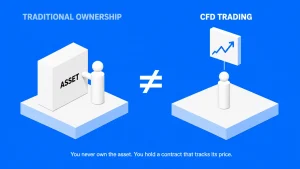
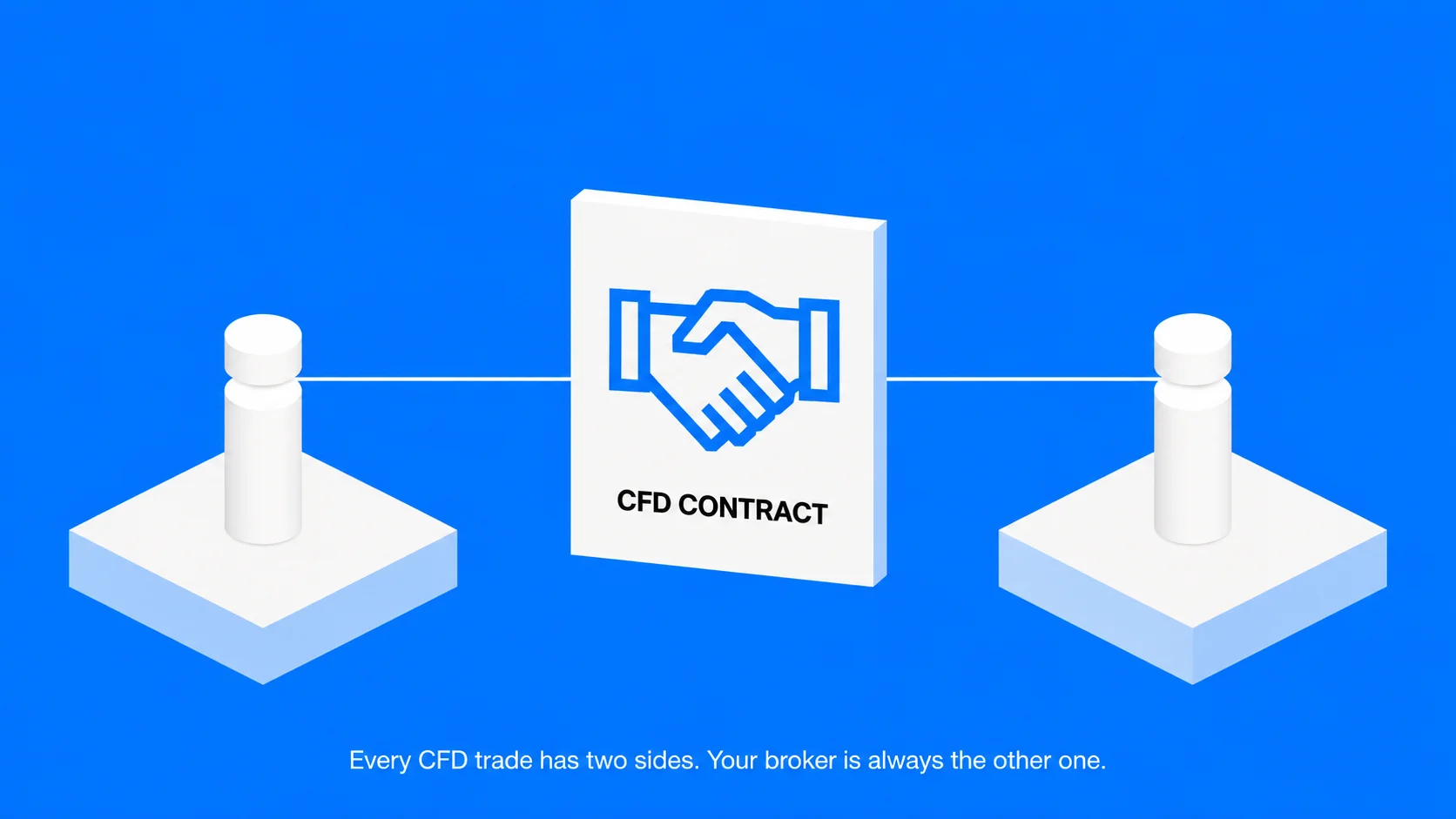
A CFD broker is a financial intermediary that offers Contracts for Difference to retail clients and acts as the direct counterparty on every trade. When a trader opens a CFD, the broker takes the opposite side, quotes the bid and ask, and settles the price difference in cash on closure. The broker is not an exchange, and it is not a custodian of any underlying asset; the trader holds a bilateral contract rather than shares, currency, or commodities. For a deeper look at the underlying instrument, our CFD trading basics guide covers contract mechanics in detail.
The distinction matters because traditional stockbrokers route orders to exchange and transfer ownership, while a CFD broker creates and settles its own contracts directly with the client which also shapes the cost structure that follows.
What are the Costs and Fees of Trading with a CFD Broker?
The cost structure of a CFD broker falls into a few recurring charges that quietly determine whether a strategy is profitable:
- Spread - the difference between buy and sell quotes, paid at entry and embedded in the price.
- Commission - usually applied to share and ETF CFDs as a percentage of trade value; forex, indices, and commodities tend to be commission-free with cost embedded in the spread.
- Overnight financing - charged daily on leveraged positions held past the broker’s cut-off, calculated as position size multiplied by (benchmark rate plus broker markup), divided by 365.
- Currency conversion fees - relevant when your account currency differs from the asset’s denomination; common for UAE-based traders holding USD accounts trading GBP- or EUR-denominated instruments.
- Other fees - some brokers charge for guaranteed stops, inactivity, or withdrawal processing.
How do overnight financing charges accumulate?
They compound daily, so a position carried out for weeks can see financing alone absorb a meaningful share of any gross profit. As a concrete example: a $10,000 position at a 5% benchmark rate plus 1% broker markup costs roughly $1.64 per day over 30 days that is approximately $49 before any market movement is considered. Understanding these costs is essential before considering trade execution.
How Do CFD Brokers Execute Trades?
Trade execution at a CFD broker differs from exchange-based trading. The broker is the counterparty, so when a client opens a position, the broker enters a bilateral contract rather than matching the order with another participant. The broker sources price data from the underlying market, adds its spread, and quotes the bid and ask. Fixed-spread brokers keep the spread constant; variable-spread brokers reflect underlying liquidity and may widen during news or low-volume hours.
Slippage is a related risk in volatile conditions during major news events, even market orders can fill at a worse price than quoted due to rapid price movement, distinct from gap risk.
What happens if the underlying gaps overnight?
The broker may fill at a significantly different price than expected and stop-loss orders can be skipped entirely through the gap. Both slippage and gap risk are why understanding margin matters before opening any leveraged position.
How Do Leverage and Margin Work with CFD Brokers?
Leverage is the ratio of position size to required margin, letting a small deposit control a much larger position. Margin exists in two forms: initial margin to open a trade, and maintenance margin to keep it open. If account equity falls below the maintenance level, the broker issues a margin call or closes positions automatically.
At UEXO, leverage is dynamic meaning rates adjust with position size and is structured by asset class at the first tier:
| Asset Class | UEXO Max Leverage (1st Tier) |
| Forex & CFDs | Up to 1:500 |
| Major Indices | Up to 1:200 |
| Commodities (Gold, Oil) | Up to 1:1000 |
| Stocks & ETFs | Up to 1:10 |
| Crypto (Major) | Up to 1:10 |
Leverage rates vary between brokers and depend directly on the regulatory framework they operate under. Brokers regulated under ESMA (EU) or FCA (UK) rules apply standardised retail caps typically 1:30 on major forex and 1:5 on shares, while brokers operating under other jurisdictions or those offering professional client classification, may offer higher leverage with a corresponding increase in risk exposure. UEXO’s dynamic leverage model means larger position sizes automatically step down to lower leverage tiers in line with risk management policy. To learn more about leverages offered by UEXO explore our trading markets and trading account.
Can losses exceed the initial deposit?
In principle yes, because profit and loss are calculated on the full position size, not just the margin held. Many regulators require negative balance protection for retail clients, which caps losses at the account balance and prevents a losing trade from creating a debt beyond what you deposited.
UEXO provides negative balance protection on all trading accounts, meaning your risk is always capped at what you deposit regardless of market conditions.
What Are the Risks of Trading with CFD Brokers?
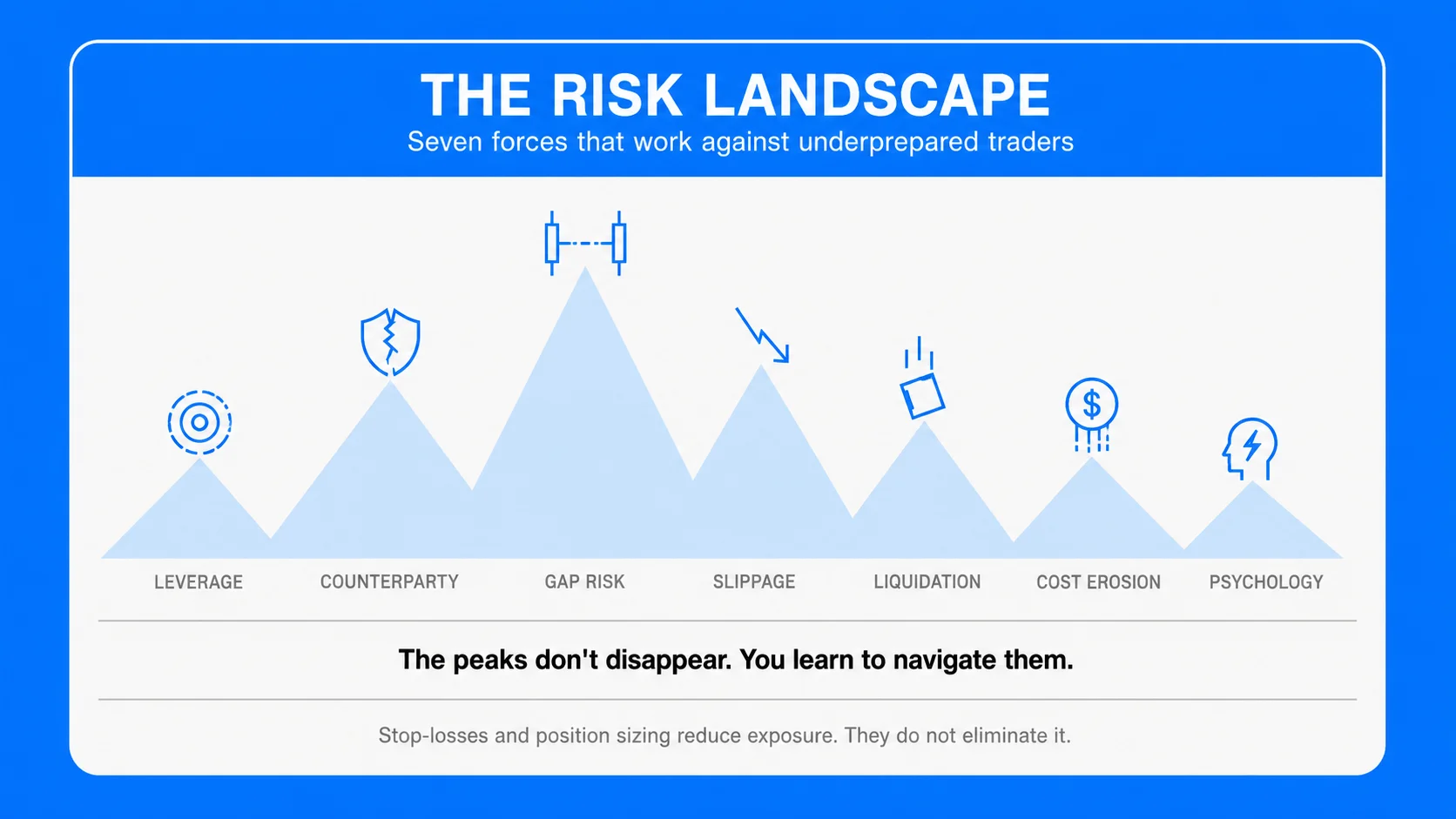
CFD trading carries significant risk, and broker disclosures show consistent loss rates among retail clients. Saxo Bank discloses that 65% of retail investor accounts lose money trading CFDs with them, while IG reports a 71% figure on its UK retail disclosure. The principal risk categories are:
- Leverage amplification - small adverse moves wipe out margin and can trigger losses beyond the deposit.
- Counterparty risk - the broker is the contractual counterparty; insolvency can put client funds at risk where segregation is incomplete.
- Gap risk - prices can jump overnight or on news, skipping past stop levels entirely.
- Slippage - fast-moving markets and news events can cause fills at materially worse prices than requested.
- Forced liquidation - positions close automatically when equity falls below maintenance margin.
- Cost erosion - cumulative spreads and overnight financing reduce returns on positions held over time.
- Psychological risk - emotional decisions and overtrading remain among the most common causes of retail loss.
Stop-loss orders, position sizing, and capital allocation mitigate but do not eliminate these risks.
UEXO addresses the most critical structural exposures directly: client funds are held in segregated accounts separate from company capital, negative balance protection is applied across all account types ensuring losses never exceed the deposited amount, and dynamic leverage automatically scales down as position size grows.
The risks most underestimated by beginners remain leverage amplification and counterparty exposure which is why these protections matter as much as cost structure when choosing a broker.
How Are CFD Brokers Regulated?
CFD brokers are regulated by the financial authority of the jurisdiction they operate in, with oversight covering capital adequacy, mandatory client fund segregation, and standardised risk disclosure. Major frameworks include:
- ESMA (EU) - sets leverage caps, mandates negative balance protection, and standardises risk warnings.
- FCA (UK) - applies similar rules and operates a public register of authorised firms.
- ASIC (Australia) - imposes leverage limits and disclosure requirements comparable to ESMA.
- DFSA (UAE / DIFC) and the UAE CMA - regulate brokers in the Emirates with capital and conduct requirements.
- CySEC (Cyprus) - regulates a large share of EU-passported brokers under MiFID II.
Jurisdictional treatment varies significantly. The US SEC prohibits retail CFD trading, while the UK, EU, Australia, the UAE, and most of Asia permit it under strict conditions.
UEXO operates under a multi-jurisdictional regulatory structure to understand how to choose the right broker by reading our comprehensive guide on how to choose a broker.
How can you verify a broker is genuinely regulated?
Check the regulator’s public register directly such as the FCA Register or ASIC Connect match the firm name and license number against the entity you are dealing with and watch for clone firms that copy legitimate broker details to deceive traders. Tax treatment is jurisdiction-specific and worth confirming locally.
What Are the Key Advantages of Using a CFD Broker?
A CFD broker offers structural advantages traditional brokerage cannot replicate:
- Leverage on margin, freeing capital for other uses.
- Long and short flexibility, with shorting as straightforward as going long.
- Single-account access to shares, indices, forex, commodities, and crypto.
- Extended trading hours on indices and forex, often outside underlying exchange hours.
- Immediate cash settlement on trade closure.
- Hedging utility against existing portfolio exposure.
These suit different styles: short-term traders gain most from leverage and tight spreads, hedgers value frictionless shorting, and globally diversified traders benefit from single-account market access. Choosing the trading platform to execute these strategies is the next decision.
What Trading Platforms and Tools Do CFD Brokers Provide?
Most CFD brokers offer one or more of these platform categories:
- MetaTrader 4 and MetaTrader 5 — widely used third-party platforms with deep indicator libraries and automated strategy support.
- cTrader — favoured for direct market access and depth-of-market data.
- Proprietary platforms — in-house web and mobile platforms, often with simplified interfaces for newer traders.
Alongside the platform itself, traders typically get charting tools, technical indicators, economic calendars, risk management orders, and mobile apps. Platform choice matters for execution speed and usability but is secondary to regulation and cost structure when evaluating a broker.
How to Choose a CFD Broker
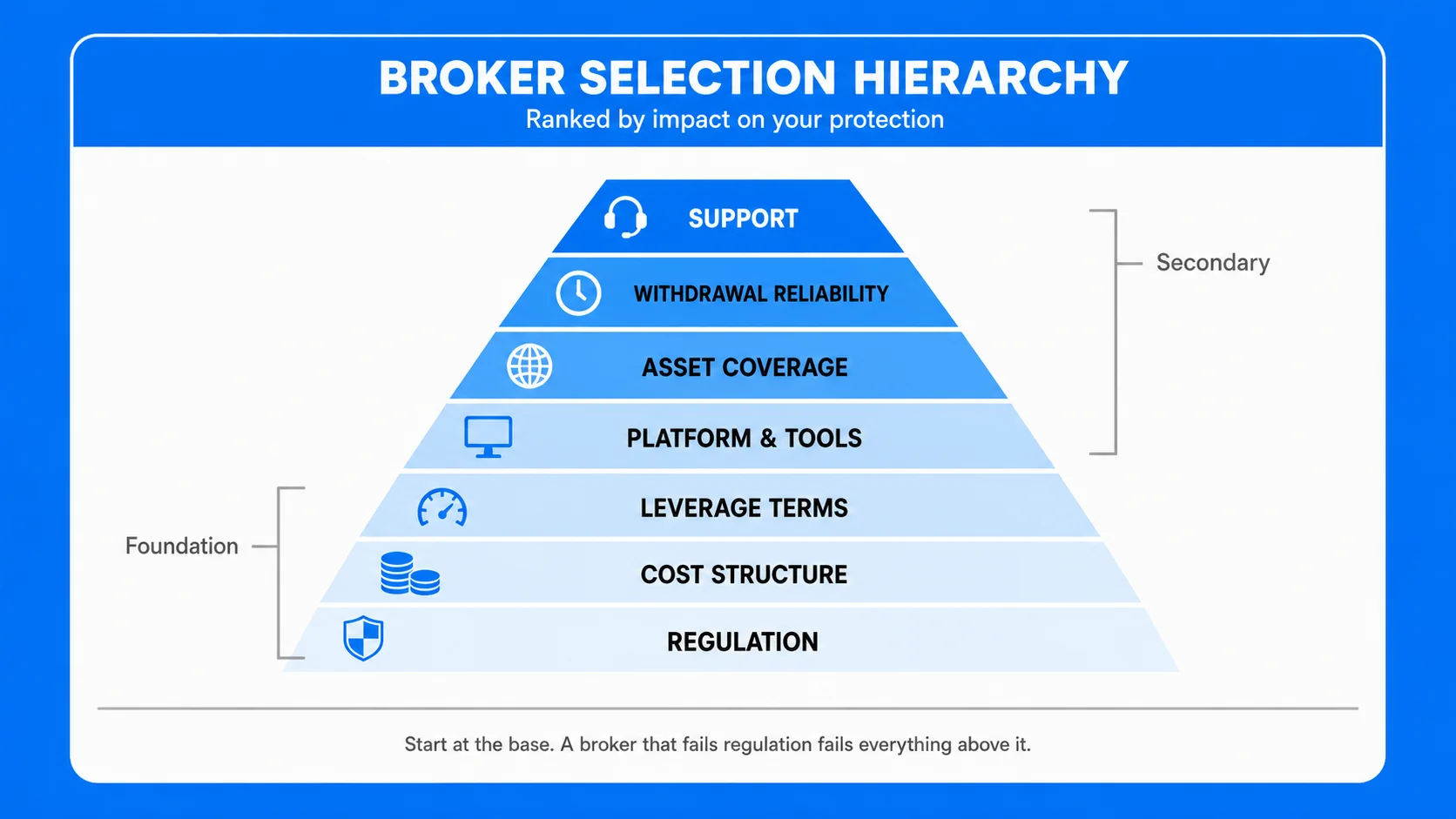
Choosing a CFD broker means evaluating several dimensions, ranked roughly by impact on trader protection:
- Regulatory status — verified license with a recognised authority in your jurisdiction.
- Cost structure — total spread, commission, and overnight financing on the markets you intend to trade.
- Leverage terms — what is offered, how it scales with position size, and whether negative balance protection applies.
- Platform and tools — reliability, execution speed, and the order types you require.
- Asset class coverage — whether the broker offers the specific markets you intend to trade.
- Withdrawal reliability — response time on withdrawals and funding; delayed or blocked withdrawals are among the most common retail complaints against unregulated brokers.
- Customer support — quality and availability on platform, account, and funding issues.
Regulatory status is the foundation. Verify the broker’s license by searching the regulator’s public register directly rather than trusting marketing material and review the standardised risk disclosure for retail loss rates.
UEXO is regulated broker offers a robust platform and dedicated customer support to retail, corporate, and institutional clients. To help you make the right decision, we have written a comprehensive guide on how to choose a broker.
How do CFD Brokers Compare to other Trading Methods?
A CFD broker differs from a traditional stockbroker because there is no ownership of the underlying asset and no exchange involvement. It differs from a futures broker because CFD contracts have no fixed expiry on most markets and are accessible at smaller minimum sizes, making them more flexible for retail traders.
How can You Start Trading with a CFD Broker?
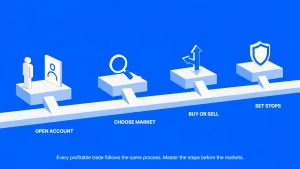
Once the broker model is understood, the next practical step is evaluating a specific broker and practising in a simulated environment before committing live capital. UEXO provides access to global CFD markets across shares, indices, forex, commodities, and crypto through UEXO Global Ltd, its regulated broker entity, with educational resources and a demo environment funded with virtual money. Verify the broker’s regulatory standing in your jurisdiction before opening a live account. Anyone ready to apply this framework in a low-risk setting can open a UEXO demo account and rehearse the full workflow with zero capital at risk.
Are CFD brokers legal in my country?
CFD broker legality varies by jurisdiction. The UK, EU, Australia, the UAE, and Singapore permit regulated CFD trading, while the US SEC prohibits retail CFD trading. Check your local financial regulator’s website for current rules.
Do I need a lot of money to start with a CFD broker?
No. Many CFD brokers offer low minimum deposits, and leverage allows traders to control larger positions with smaller capital. Practising in a demo environment with virtual funds before committing live capital is a prudent first step.
What is negative balance protection?
It is a regulatory requirement of various jurisdictions that caps your maximum loss at your account balance, preventing a losing trade from creating a debt to the broker beyond what you deposited.
Conclusion
Getting started with CFD trading is less about choosing the right market than choosing the right broker — regulation, cost structure, leverage terms, and platform quality together shape every trade outcome. With this framework, evaluating any broker against verifiable criteria becomes methodical rather than guesswork. Verify your local broker regulation, rehearse with virtual funds, then open a UEXO trading account when the workflow feels reliable and the risk is understood.