What is a Contract for Difference (CFD)?
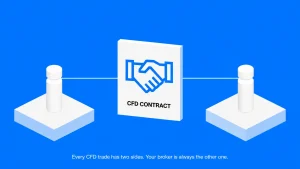
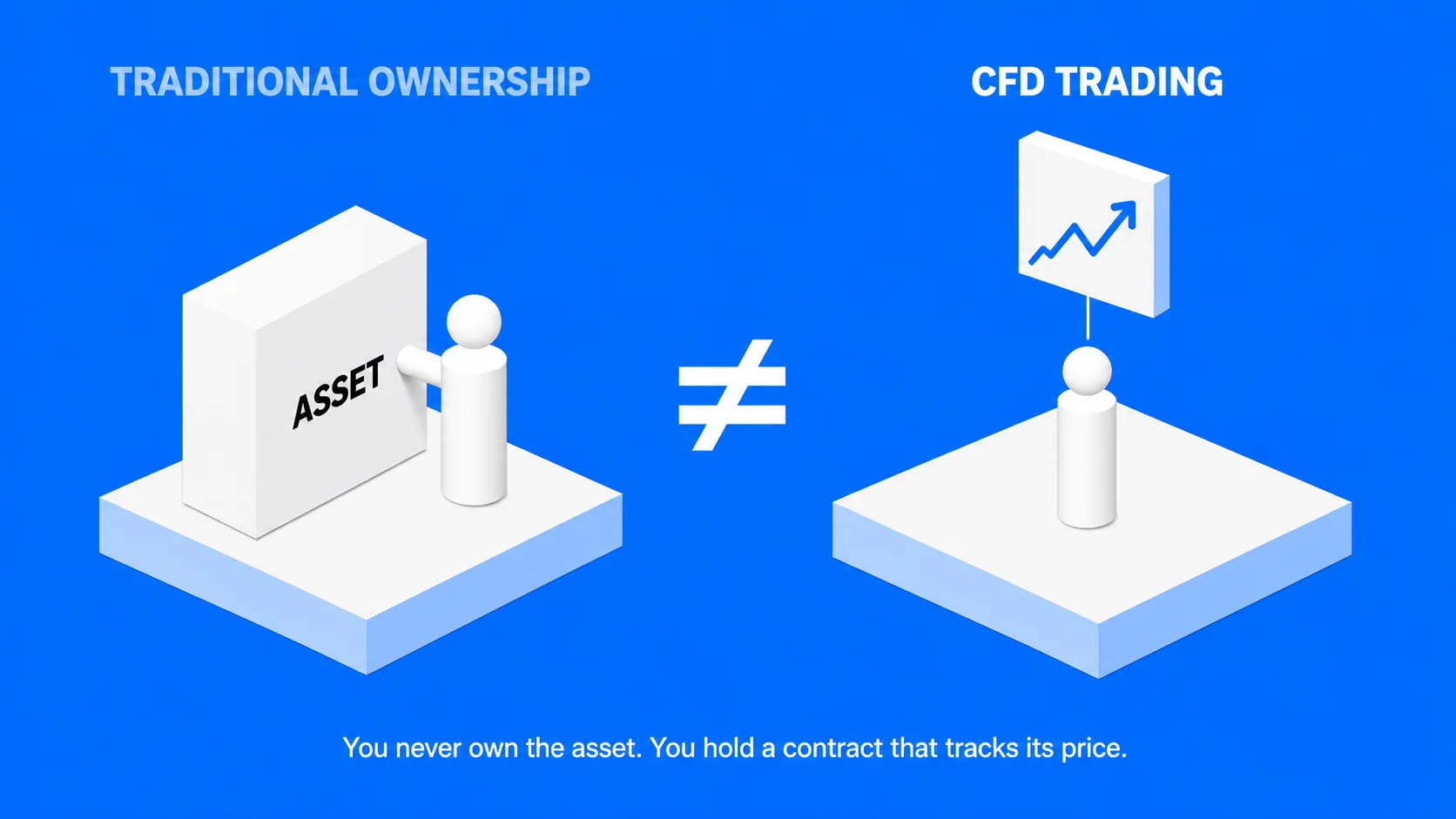
A Contract for Difference is a bilateral agreement in which a trader and a broker settle the price movement of an underlying asset between opening and closing, rather than transferring the asset itself. Because nothing is delivered, the trader never holds shares, barrels of oil, or units of currency; they hold a contract whose value tracks the market price. CFDs trade over the counter (OTC) directly with the broker rather than on a central exchange, so there is no central counterparty clearing the position, and the broker quotes both the buy and sell price.
How does a CFD contract remain open without an expiry date?
Most major CFD markets, such as spot forex, indices, and shares, carry no fixed expiry, so a position can be held for as long as the margin requirement is met, though a daily overnight financing charge usually applies. The exceptions are CFDs based on futures or options, which inherit the fixed expiry of their underlying contract. Holding only a fraction of the position value as margin is what gives CFDs their reach, and it is also what makes them sensitive to risk.
How does CFD trading work?
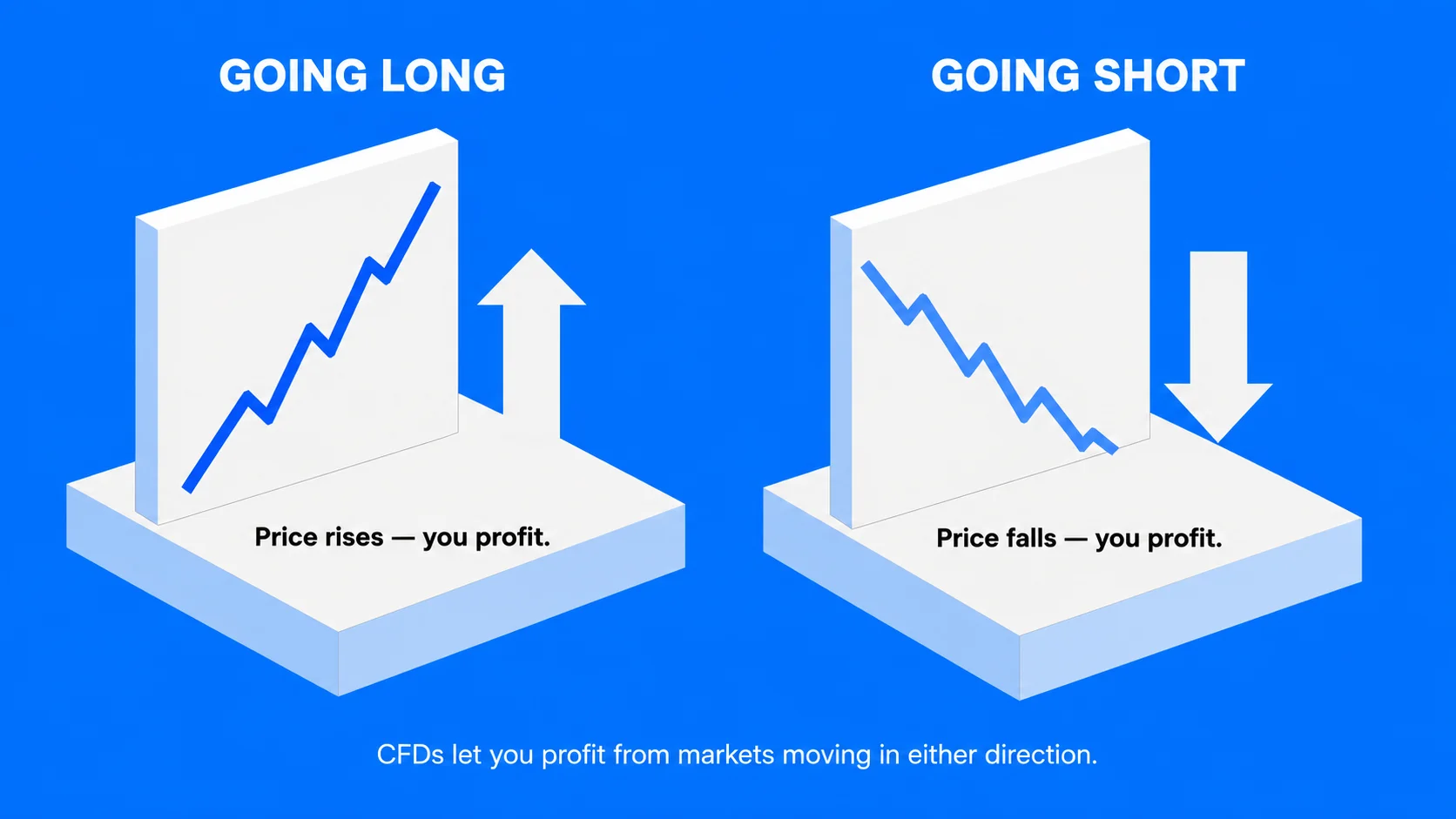
A CFD trade begins when a trader selects a market and decides whether to go long (buy) if they expect the price to rise, or short (sell) if they expect it to fall. They choose a trade size, measured in contracts or lots, and that size determines how much each price movement is worth. The broker quotes a buy and a sell price with the spread already built in, and the position opens at the relevant side of that quote.
To open the trade, the trader deposits margin, a percentage of the full position value, while the broker effectively finances the remainder. Profits or loss is then calculated on the entire position, the difference between the opening and closing price multiplied by the number of contracts, not on the margin alone, which is why outcomes are amplified and why a margin call can follow an adverse move. What determines the value of a single point movement is the contract size combined with the price increment of the underlying, so a standard lot in a major forex pair carries a different point value than a single share contract. Closing the position simply means placing the opposite trade, after which the net result settles in the account. The legal framework around this contract varies widely by country.
CFD Regulation and Geographic Restrictions
CFD trading is legal and widely available across many parts of the world, but it is heavily regulated, and the rules vary by jurisdiction. It is permitted under clear frameworks in the EU, the UK, Australia, much of the Middle East, and parts of Asia, where regulators impose strict conditions: the ESMA framework across the EU sets leverage caps, mandatory negative balance protection, and standardised risk warnings, while national authorities such as the UK’s Financial Conduct Authority, Australia’s ASIC, Cyprus’s CySEC, the United Arab Emirates’ Dubai Financial Services Authority (DFSA) and the UAE’s Capital Market Authority (CMA) apply comparable product intervention rules. A smaller number of markets restrict or prohibit CFDs altogether; the United States, for example, bans them for retail investors, with the SEC citing high leverage, the OTC structure, and investor protection.
Because compliance is what separates a protected account from an unprotected one, understanding what a CFD broker is and how they operate is worth doing before verifying a license or funding an account.
How can you confirm that a broker is regulated?
Check the license number displayed on the broker site, then cross-check it directly on the corresponding regulator’s official register.
What are the key features of CFD trading?
Three operational characteristics define the CFD trading experience, and they are standard across the instrument rather than unique to any single broker:
- Long and short flexibility – traders can profit from falling markets by going short just as easily as from rising markets by going long, without borrowing the asset.
- Leverage – a small margin deposit controls a much larger market exposure, amplifying the effect of every price move in both directions.
- Price tracking – CFD prices closely mirror the underlying market, with the broker’s spread applied to the quote.
Does leverage work the same across asset classes?
No. Margin requirements differ by asset and broker, with major forex pairs typically requiring lower margin than individual shares or commodities, which carry higher requirements because they are more volatile. These three features interact, since the freedom to go long or short combined with leverage is what creates both the opportunity and the outsized risk that make a worked example useful.
What are the advantages of CFD trading?
Traders choose CFDs for several practical reasons, though each benefit only holds when risk is actively managed:
- Leverage reduces the capital needed to open a position compared with buying the asset outright.
- Going short is as straightforward as going long, allowing strategies in falling markets.
- A single account can access shares, indices, commodities, forex, and crypto across global markets.
- Short-term trading avoids the costs of physical ownership, with lower minimum sizes and no stamp duty in some jurisdictions.
- CFDs can be used for hedging existing holdings.
What are the risks and costs of CFD trading?
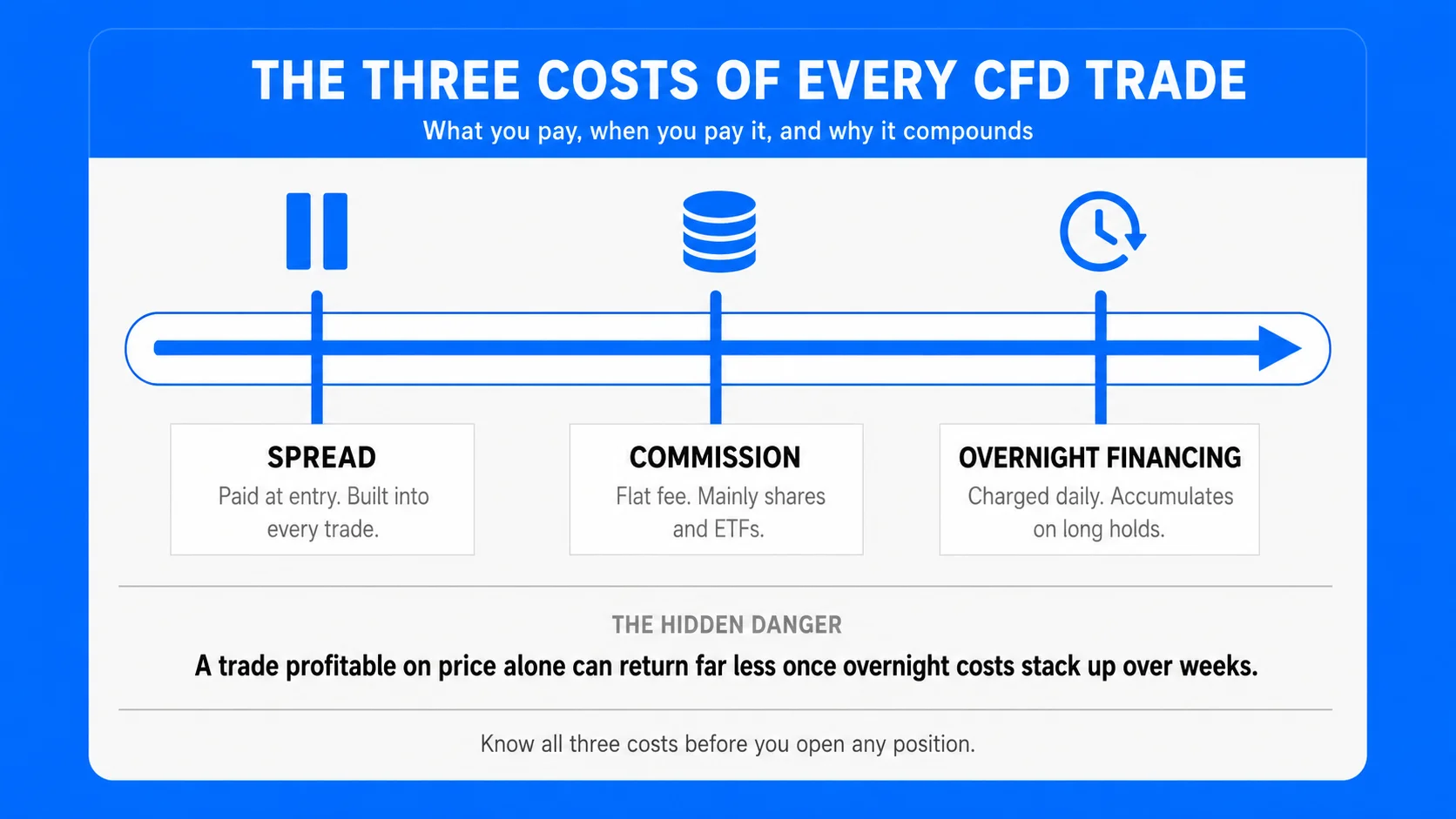
Margin works in both directions. The same leverage that lets a small deposit control a large position means losses are calculated on the full position value, not just the amount deposited, so a position can lose more than the initial stake. If the account balance falls below the required margin, the broker can issue a margin call or close the position automatically through liquidation. These dangers are exactly why regulators across several regions have introduced retail leverage caps and negative balance protection, including the European Securities and Markets Authority in the EU from 2018 and Australia’s ASIC, with comparable measures applied by national authorities elsewhere.
Three costs apply to most CFD positions:
| Cost type | How it is charged | Calculation base |
| Spread | Difference between buy and sell price | Per trade, at entry |
| Commission | Flat or percentage fee | Mainly share and ETF CFDs |
| Overnight financing | Interest on borrowed exposure | Daily, on positions held overnight |
How much can overnight financing impact on a long-term position? On a leveraged position held for weeks or months, the daily financing charge accumulates and can quietly erode a meaningful share of any gross profit, so a trade that looks profitable on price alone can return far less once holding costs are deducted. Controlling exposure through disciplined risk management is therefore as important as picking the right direction.
CFD trade example - step by step
The figures below are illustrative only; actual prices, spreads, and financing rates vary by broker and market conditions. Imagine a trader expects a major share index to rise, opens a long position of 10 contracts at a quoted price of 5,000, and posts 5% margin against a position value of 50,000.
- Open the position at the ask price and record the full position value of 50,000.
- Account for the opening spread, the small gap between the buy and sell quote, as the first cost.
- Hold the position overnight and incur a daily financing charge on the leveraged exposure.
- Close the trade if the index rises to 5,100, producing a gross gain of 100 points times 10 contracts, or 1,000.
- Deduct the spread and accumulated financing to arrive at the net result.
How is that financing charge actually calculated? In words, it is Position Size multiplied by (Benchmark Rate plus Broker Markup), divided by 365, applied each day the position stays open. The same trade in reverse would produce a loss, and because losses scale with the full position, the net result can exceed the initial margin.
Is hedging with CFDs effective?
It can be, since a short CFD on a correlated asset can offset losses in a physical portfolio, but the hedge is rarely perfect and carries its own spread and financing costs. Tax treatment of any of these benefits depends on individual circumstances and jurisdiction, so professional advice is worth seeking. Whether these advantages suit a particular trader depends on their goals and tolerance for risk.
Is CFD trading right for you?
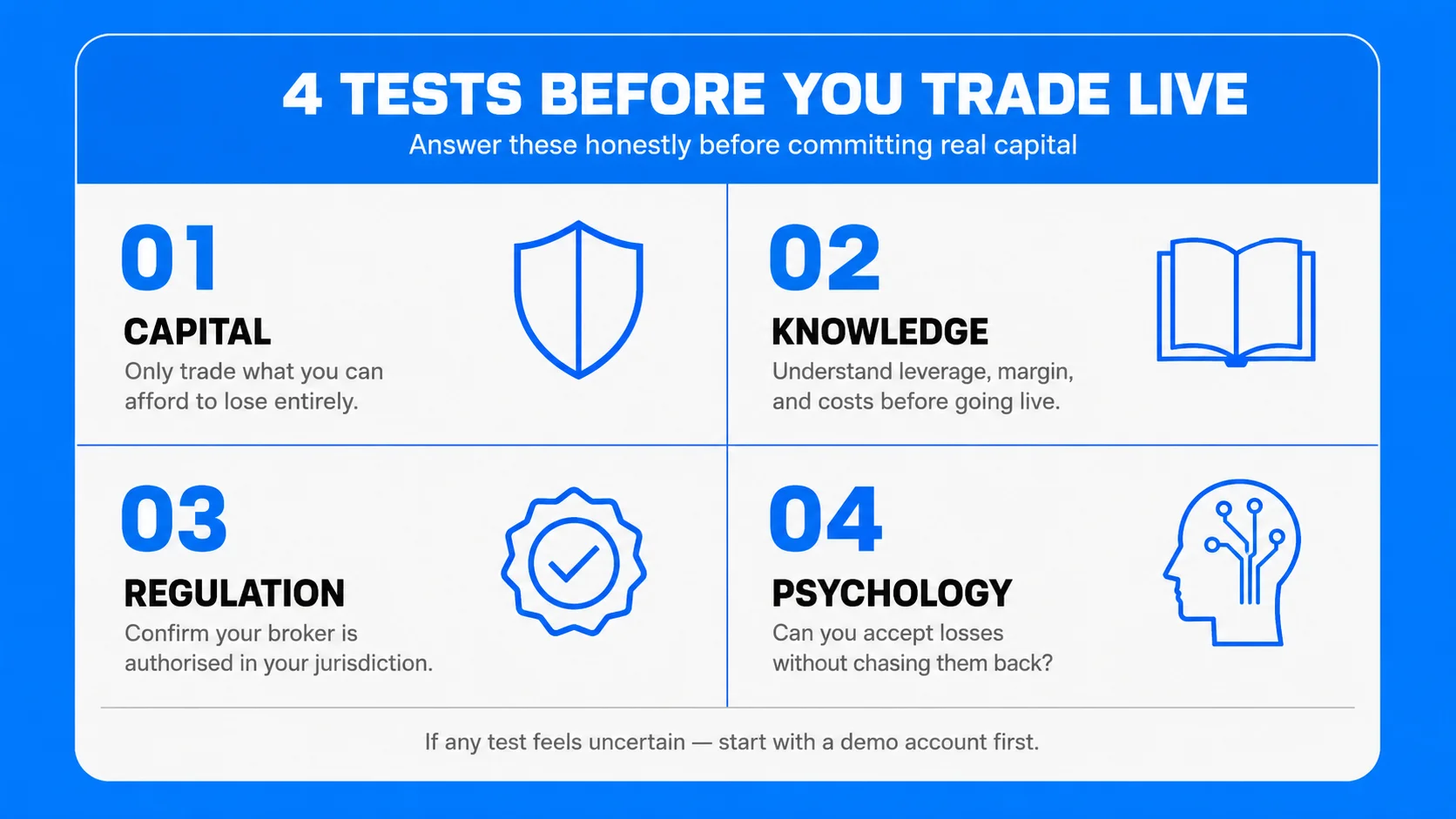
Four tests help answer that question honestly.
- Capital: Only money the trader can afford to lose should be committed, because leveraged losses can exceed the deposit.
- Knowledge: a trader should understand leverage, margin, and the full cost structure before opening a live position.
- Regulation: the broker should be authorised in the trader’s jurisdiction, which is worth confirming against the full risk disclosure and the relevant register.
- Psychology: the ability to accept losses without chasing them back. Anyone uncertain after weighing these can begin on a demo account to build practical understanding without committing real capital, which makes practicing the natural first step before any live trade.
How to start trading CFDs?
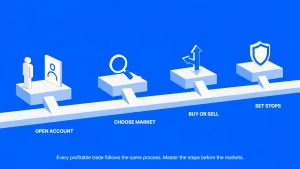
The first step is choosing a broker regulated by a recognised authority, completing the identity verification (KYC) process and funding the account with an initial deposit. Before risking real money, read our how to trade CFDs guide to walk through the full workflow step by step, then use a demo account and educational materials to test strategies in a simulated environment.
When the approach feels reliable, open a live CFD trading account and start with a small position in a single liquid market to keep early mistakes manageable. Setting stop-loss and position-size rules in advance turns risk management from an afterthought into a habit from the very first trade.
How does UEXO support CFD traders?
Putting this knowledge into practice depends on having a platform that matches the prerequisites covered above. When evaluating one, a CFD trader should look for:
- A demo environment for practising with virtual funds before risking real capital.
- Clear, transparent pricing on spreads and financing.
- A user-friendly interface that suits the trader’s experience level.
- Educational resources that explain the mechanics and the risks.
One platform that provides these tools for learning and practising CFD trading is UEXO, which offers a demo account funded with virtual money, educational materials, and access to a range of CFD markets. Practising in that simulated setting lets a trader rehearse the full workflow, from opening a position to managing costs, before committing real funds.
Does a CFD expire?
No. Most major CFD markets, such as spot forex and indices, have no fixed expiry, so positions can be held if margin is maintained. The exceptions are CFDs on futures and options, which carry expiry dates tied to their underlying contracts.
Is CFD trading available everywhere?
No. CFDs are available in many regions, including the EU, the UK, Australia, the Middle East, and parts of Asia, but some markets restrict or ban them. The United States is the most notable exception, where the SEC prohibits CFD trading for retail investors, so availability should always be checked against local regulations.
Conclusion
A CFD is a flexible way to take a position on rising or falling markets across shares, indices, commodities, forex, and crypto, without owning the underlying asset. That flexibility comes from leverage, which is also what makes the instrument risky, since losses are calculated on the full position and can exceed the initial deposit. Approached with a solid grasp of leverage, costs, and regulation, CFD trading can be a useful tool for engaging global markets, but only ever with capital can a trader afford to lose. The sensible way to apply everything covered here is to rehearse it first, so consider building confidence with a demo CFD trading account before moving to live funds.