Key takeaways
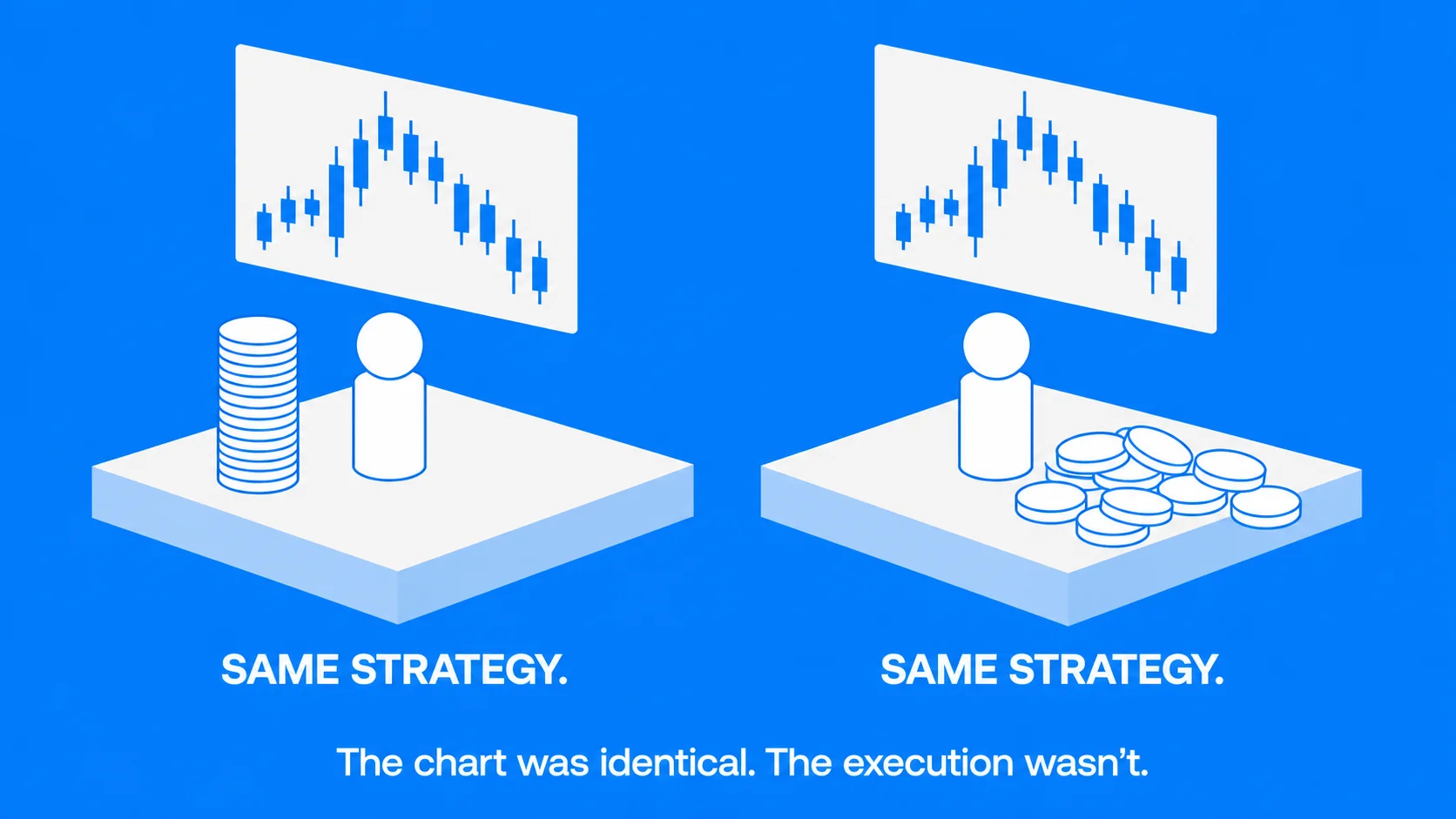
- Execution beats analysis two traders running the same system finish the year apart because of how they behave under pressure.
- Emotion is costly and measurable: the most active households earned 11.4% a year versus 18.5% for the least active (Barber and Odean, 2000), and losses register about twice as strongly as equal gains.
- Every pitfall has a bias beneath it – FOMO, revenge trading and loss-chasing trace to overconfidence, anchoring and loss aversion, and overconfidence is hardest to fix because it attacks the noticing.
- Structure beats willpower: a written plan, a trade journal, fixed position sizing and daily loss limits move decisions out of the moment of highest pressure.
- Judge the sample, not the trade a 45%-win strategy produces losing streaks as ordinary statistics, and new routines need roughly two to three months to become automatic.
What is trading psychology?
Trading psychology is the emotional and cognitive component of trading decision-making, studied formally within behavioral finance, covering the fear and greed behind premature exits and oversized bets, the biases that distort how information is read, the traits that shape a person’s response to uncertainty, and the discipline and risk rules that hold those forces in check. It matters as much as technical knowledge or skill, since analysis produces a plan while psychology decides whether the plan survives a live position.
Barber and Odean (2000), studying 66,465 household accounts, found the most active traders earned 11.4% annually against 18.5% for the least active, a gap driven by behavior rather than stock selection.
Why do emotions override rational analysis in trading?
Decision-making runs on two systems, one fast and automatic, one slow and deliberate (Kahneman, 2011), and emotional arousal shifts control toward the fast one. Under stress, attention narrows to the open loss on screen rather than the hundred trades making up a strategy’s expectancy. Lo and Repin (2002) measured elevated skin conductance in professional traders during volatility spikes, so the reaction is physiological rather than a character flaw. The analysis done beforehand remains available, but the trader has stopped using it, which is why emotions decide more outcomes than most admit.
How do fear and greed drive trading decisions?
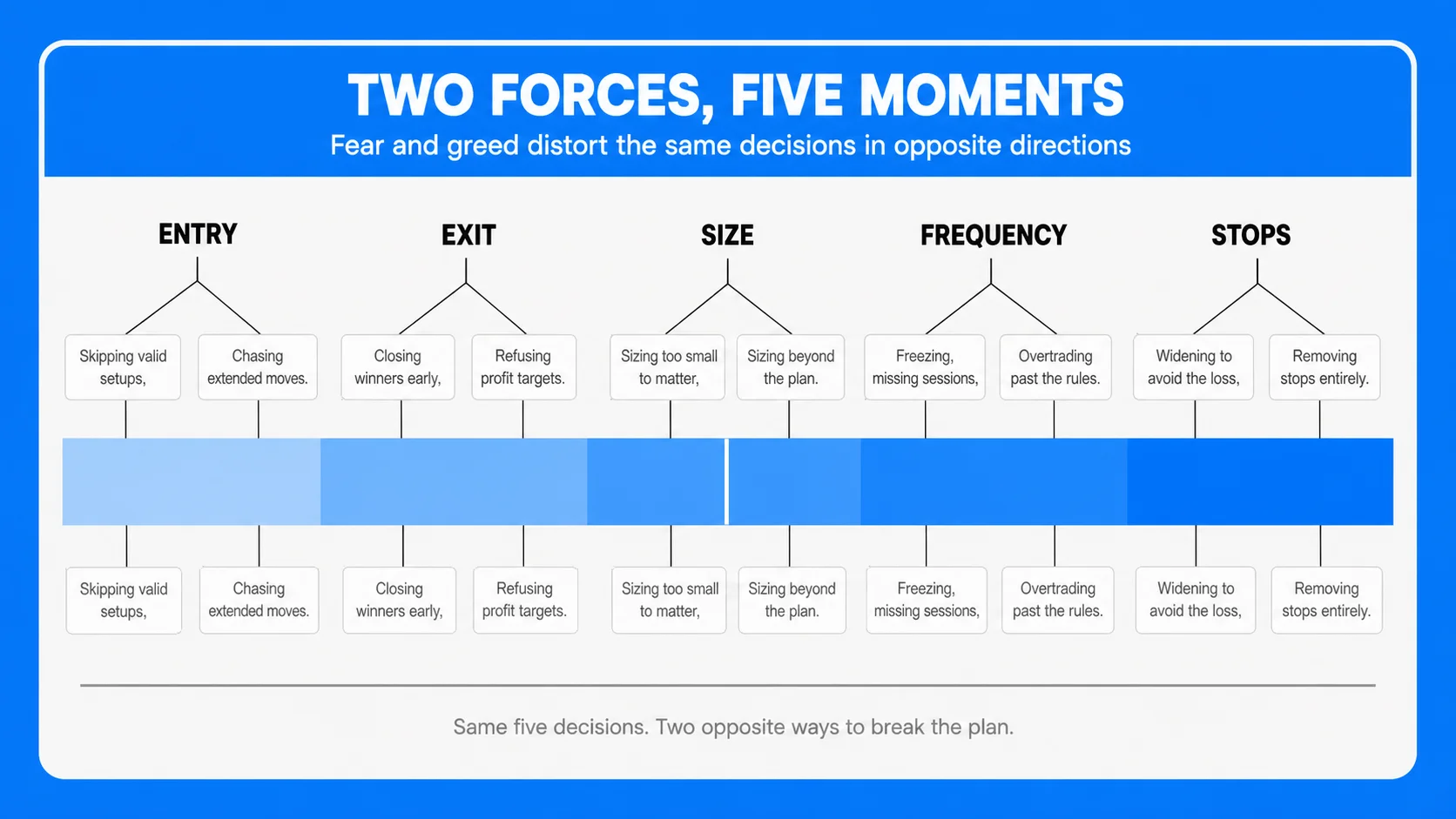
Fear and greed are the two emotions behind most trading errors: fear collapses a trader’s horizon into loss avoidance; greed stretches it into gains that have not happened.
| Decision point | Fear-driven behavior | Greed-driven behavior |
| Entry | Skipping valid setups after a loss | Chasing price into extended moves |
| Exit | Closing winners at first pullback | Refusing planned profit targets |
| Position size | Sizing too small to matter | Sizing beyond plan limits |
| Frequency | Freezing and missing whole sessions | Overtrading past plan rules |
| Risk control | Widening stops to avoid realising loss | Removing stops to let positions run |
Which emotion causes more trading losses? Evidence points to greed, via overconfident overtrading: Barber and Odean (2000) put the gap between most and least active investors near seven points a year. Fear costs less: Odean (1998) found the winners investors sold outperformed the losers kept by 3.4 percentage points over the next year. Intensity matters independent of direction: Lo, Repin, and trading psychologist Brett Steenbarger (2005) tracked 80-day traders for five weeks and found the strongest reactors performed significantly worse. Both figures come from equity accounts rather than leveraged markets, and in forex trading these behaviors bite harder, since leverage magnifies what one emotional decision controls.
What are the common emotional pitfalls in trading?
The behaviors that cost traders money cluster into a few pitfalls sharing one root: acting to relieve emotional discomfort rather than because the plan says so.
- FOMO: entering late on a move already in progress, purely because it is moving.
- Herd behavior: taking a position because others hold it, without independent reasoning.
- Impulsive trading: placing trades absent from the plan, often after screen fatigue.
- Chasing losses: increasing size to recover a drawdown faster than the strategy allows.
- Revenge trading: re-entering immediately after a loss to prove the market wrong.
- Premature profit-taking: closing a winner early to end the discomfort of unrealised gains.
- Overtrading: taking more positions than the plan permits, usually after a winning streak.
Which pitfall is most common among beginners?
Chasing losses, because it fuses two forces beginners cannot yet separate: discomfort at an open loss and the belief that a bigger position erases it faster. Each of these pitfalls has a bias underneath it.
What are the main behavioral biases in trading?
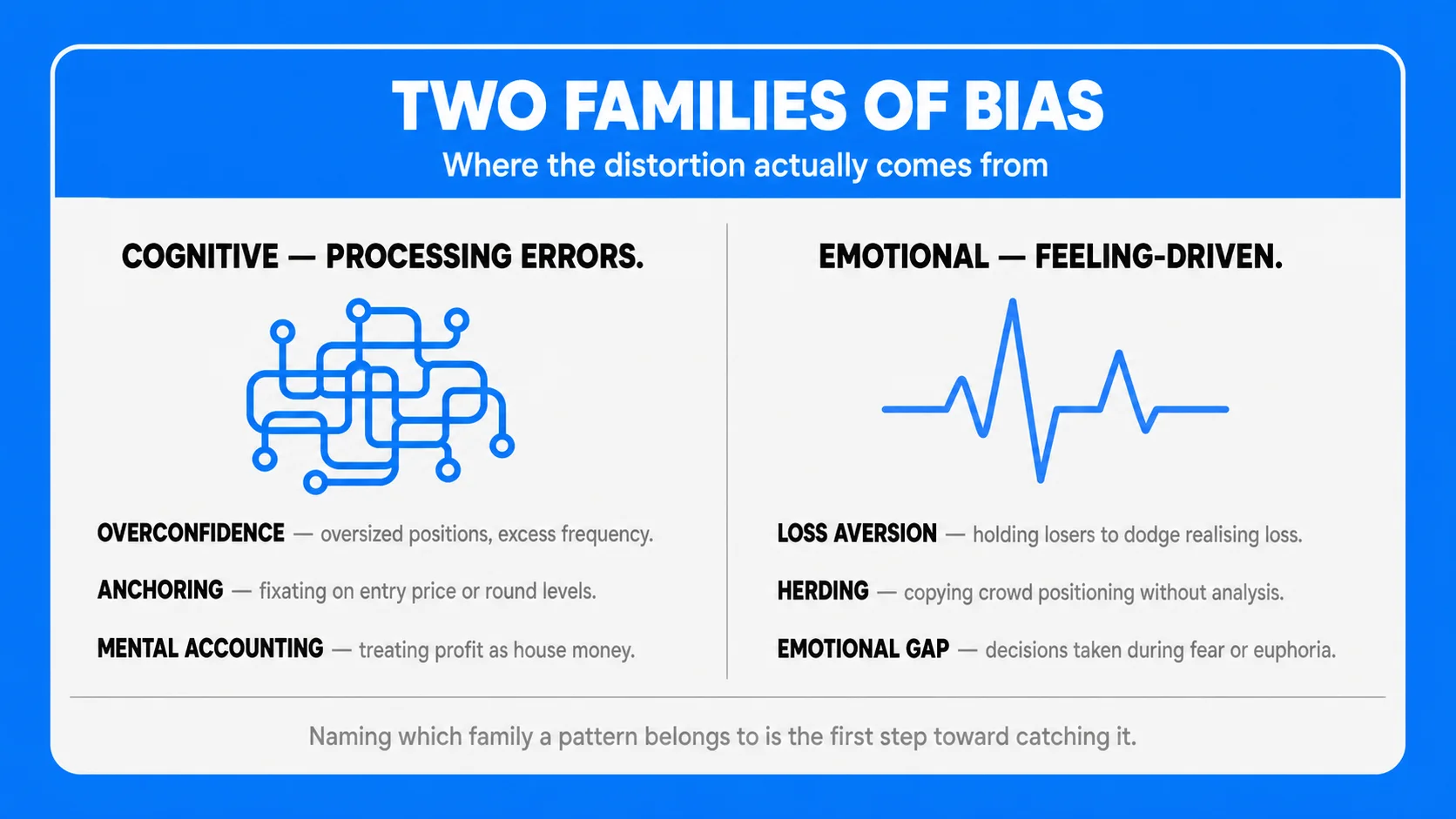
Those pitfalls each trace back to a bias, and biases divide into cognitive ones, errors in processing information, and emotional ones, driven by feeling. Both distort decisions before a trader notices making a choice.
| Bias | Type | How it appears in trading |
| Overconfidence | Cognitive | Oversized positions, excessive trade frequency |
| Anchoring | Cognitive | Fixating on entry price or round levels |
| Mental accounting | Cognitive | Treating profits as house money |
| Loss aversion | Emotional | Holding losers to avoid realising loss |
| Herding | Emotional | Copying crowd positioning without analysis |
| Emotional gap | Emotional | Decisions taken during fear or euphoria |
Loss aversion is measurable: losses register about twice as strongly as equal gains (Tversky and Kahneman, 1992).
Which bias is hardest to overcome?
Overconfidence, structurally: correcting a bias requires noticing it, and overconfidence attacks the noticing. Pronin, Lin, and Ross (2002) named this the bias blind spot, where people see distortion in others’ judgement while rating their own as clear. Traders can name every entry above and still assume it describes someone else, which is why biases outlast knowledge of them.
How can traders build emotional discipline?
Emotional discipline counters those biases with external structure rather than willpower: written rules, an honest record, and routines that cut decisions made mid-position.
- Write a trading plan. Specify setups, entry and exit conditions, position size, and maximum loss per trade and per day.
- Keep a trading journal. Log six fields per trade: date and instrument, setup name, reason for entry, emotional state at entry, outcome, and whether the plan was followed. Patterns appear only across dozens of entries.
- Run a pre-market routine. Review the plan, note scheduled news, and mark the levels that matter.
- Run a post-market review. Separate process errors from bad outcomes: a loss that followed the plan differs from a win that broke it.
- Practise strategic patience. Treat waiting for a valid setup as part of the strategy, not inactivity.
How long does it take?
Lally and colleagues (2010) found new behaviours took a median of 66 days of consistent repetition to become automatic, ranging from 18 to 254 days. A journaling habit therefore needs two to three months of daily use before it stops taking effort, and one missed day does not reset it. Discipline built that way holds under pressure.
How do risk-management tools support trading psychology?
Risk-management tools do psychological work as well as financial work, converting decisions that would be made under emotional pressure into decisions made in advance, when discipline is cheap.
- Stop-losses: define the exit before entry, removing the in-position argument about whether to hold.
- Position sizing: cap risk per trade so that no single outcome can dominate the account.
- Daily loss limits: end the session at a set drawdown, the structural answer to revenge trading.
- Three-strikes rule: stop after three consecutive losses, on the assumption that judgement has degraded.
- Trailing stops: protect open profit mechanically rather than by a judgement call about greed.
Which risk tool has the biggest psychological impact?
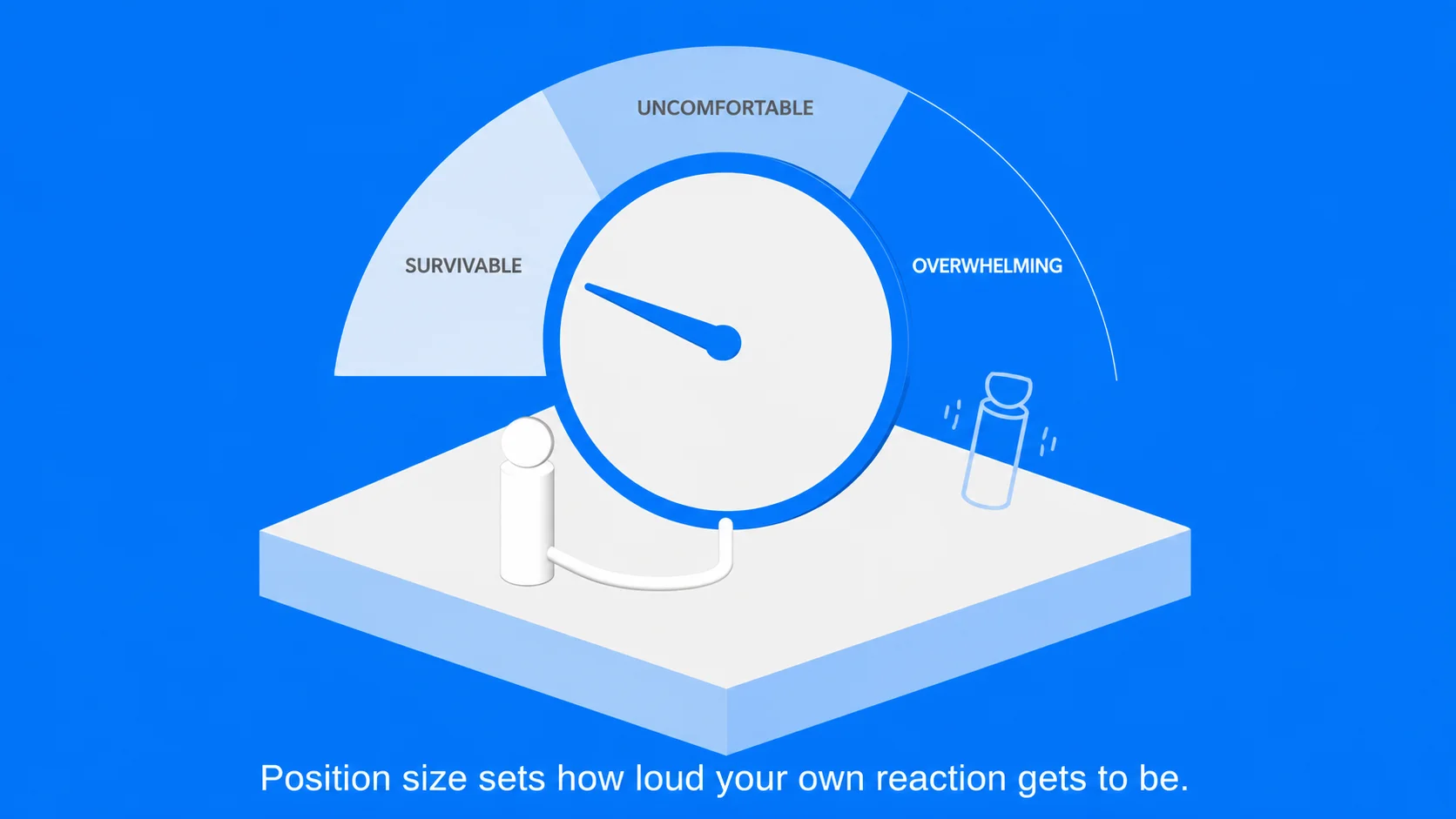
Position sizing, because it sets emotional intensity before the trade starts. A size where a loss is survivable produces a manageable reaction; anything larger produces fear strong enough to override every other rule. Risk settings are the volume control on a trader’s own reactions.
What is trader DNA and why does self-awareness matter?
Trader DNA is the combination of traits, beliefs, and risk tolerance a trader brings to the market: how they handle uncertainty, how fast they act, how they read being wrong. Two traders with identical rules break them at different points, because pressure finds different weaknesses.
Self-awareness makes those weaknesses visible. A journal recording emotional state alongside trade data turns vague frustration into a named pattern, such as oversizing after two losses, and a named pattern can be ruled out.
Can trader DNA be changed?
Partly, and it matters less than traders assume: Lo, Repin, and Steenbarger (2005) found no single trader personality profile, suggesting skill is learned rather than innate. Temperament stays stable, but market behaviour does not, since a trader who knows they oversize after losses can cap size automatically. The goal is designing around traits, which begins with self-awareness.
Why does accepting market randomness improve trading psychology?
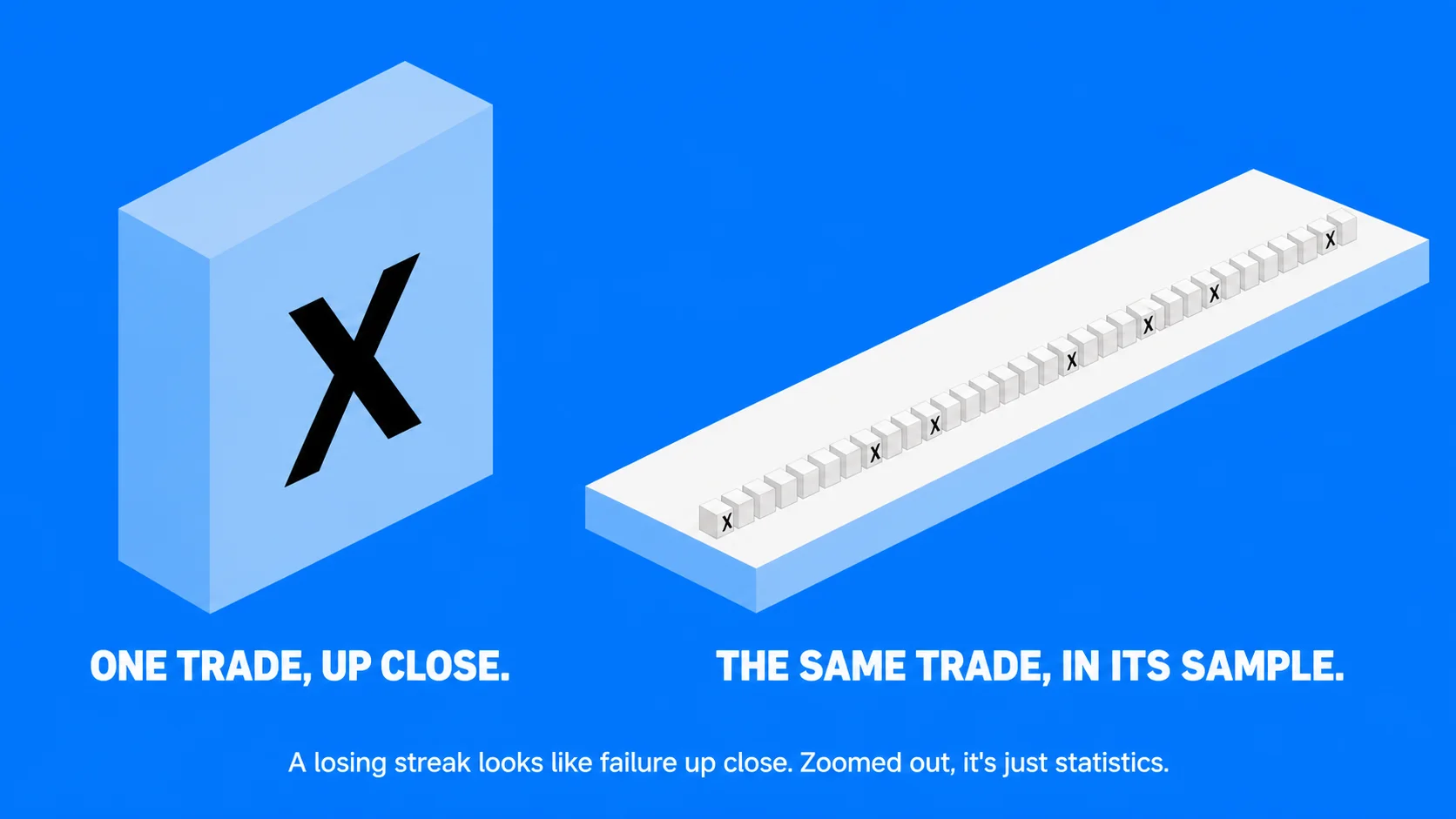
Self-awareness has a companion insight: markets carry a large random component over short horizons, so a single trade outcome says little about the decision behind it. That changes what counts as feedback, since a good decision can lose and a poor one can win, and judging a strategy by its last result is judging noise.
Accepting randomness reduces attachment to outcomes by moving evaluation from the trade to the sample. A strategy winning 45% of the time produces losing streaks of five or six as ordinary statistics, not failure. Traders who expect them respond differently from traders reading each one as a verdict.
Does accepting randomness mean giving up on analysis? No. Randomness in one trade coexists with edge across many, and analysis is how a trader finds conditions where the distribution tilts in their favour. Accepting randomness does not remove the edge; it stops a trader demanding certainty from tools that only produce probabilities.
How does trading psychology connect to long-term trading success?
Thinking in probabilities is what turns these pieces into a durable result rather than a good month. Emotional control, bias awareness, routines, and pre-set risk limits keep execution consistent enough that a strategy’s edge has time to appear. The bar is high: Barber, Lee, Liu, and Odean (2014), studying Taiwanese day traders, found fewer than 1% predictably earned positive returns net of fees. Long-term performance depends less on a better setup than on executing an adequate one the same way for months, which raises the question of what daily application looks like.
How does behavioral finance relate to trading psychology?
Daily application rests on a research base: behavioral finance studies how psychological factors shape financial decisions and market prices, challenging the fully rational participant assumed by the efficient market hypothesis. Trading psychology is its applied side: behavioral finance identifies and measures biases such as loss aversion and overconfidence, while trading psychology concerns what a trader does about them at the platform.
What trading tools support psychological discipline?
Several categories of platform feature support psychological discipline directly: order types that pre-commit an exit, such as stop-loss and trailing stop orders; position-size and margin calculators that fix risk before entry; journaling and trade-history exports that make patterns visible after the session; and alerts that remove the need to watch price continuously. Each removes a decision from the moment of highest emotional pressure. A dedicated trading platform guide covers these features and their execution settings in detail.
How can a trading account support your psychological discipline?
Discipline is practised, not decided, and the practice happens in whatever account a trader actually places orders through. Before opening one, it is worth evaluating a few attribute categories against psychological needs: available order types, including stop and trailing stop functionality; position-sizing and risk controls; transparency of costs, since unexpected charges disrupt planned risk calculations; journaling or trade-history access for post-session review; and the platform’s behaviour under fast market conditions.
UEXO offers a trading account sign up for traders who want an environment in which to practise disciplined execution, and a trading account sign up is the registration path. Judge any account, this one included, by whether its tools make a written plan easier to follow than to abandon.
Can trading psychology be improved?
Yes – trading psychology is a skill that can be developed through self-awareness, discipline routines, and consistent practice. Progress is measured over months of repeated execution rather than in single sessions.
Do professional traders experience fear and greed?
Yes – professional traders experience the same emotions but manage them through structured routines and risk rules. The difference lies in what happens after the emotion arrives, not in feeling less of it.
Conclusion
An account balance over several years reflects consistency of execution more than quality of analysis, because psychological discipline lets a strategy’s edge compound instead of being interrupted by fear, greed, and bias. The path is unglamorous: write the plan, size positions so losses stay survivable, journal every trade, and give the routines two to three months before judging them. Traders ready to practise that discipline in a live environment can complete a trading account sign up with UEXO and begin applying it.