Key Takeaways
- What it is: software placing currency trades on rules set in advance, with manual override intact and no profit guarantee.
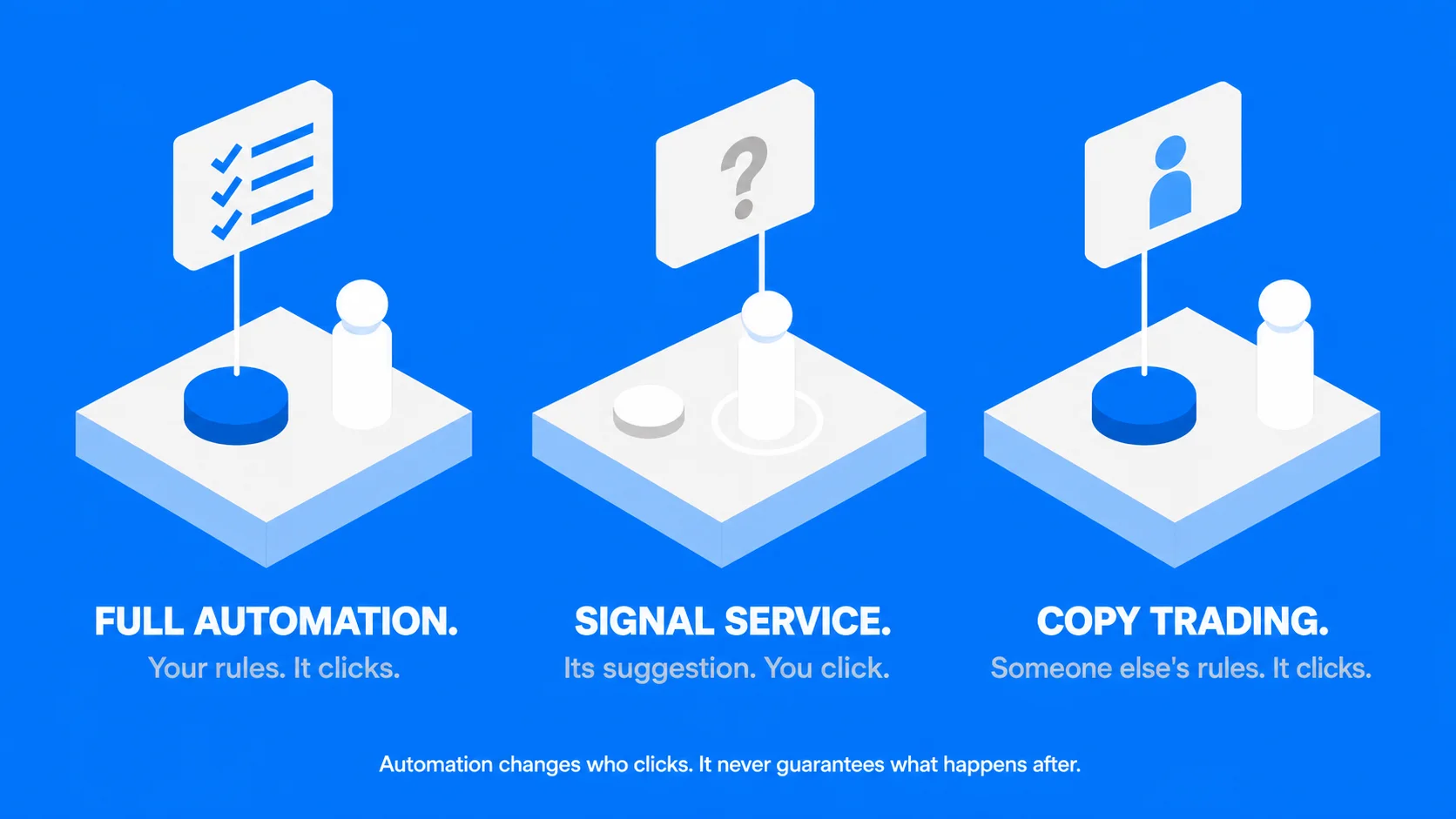
- Three degrees: full automation runs your own rules, signal services leave the final click to you, copy trading mirrors a selected trader’s positions in your account.
- The main failure mode: rules tuned to fit past data, which look strong in a backtest and weak in live conditions.
- Regulation gap: a licensed broker does not make the robot vendor licensed, and most software sellers are unregulated in their own right.
- Safe order of steps: understand the rules, backtest, forward-test with virtual funds for weeks, then consider live capital.
How Does Automated Forex Trading Execute Trades?
Automated forex trading is software that applies predefined rules or algorithms to buy and sell currency pairs on a trader’s behalf, with the trader able to override or switch the system off, and with no guarantee of profit attached.
The execution loop is short. The software checks price data for its assigned instruments against the strategy’s entry conditions, then sends an order when every condition is met at once. Exit rules, position size and stop levels sit in the same instruction set, so the system runs the trade to its close.
Automation comes in three degrees. Full automation trades on rules you own, signal services leave the final click to you, and copy trading mirrors a selected trader’s positions in your account, which automates execution without requiring you to write the rules.
Human control does not disappear either. Most platforms let a trader pause the system, close positions, or change parameters mid-run. The distance between rules written in advance and conditions arriving live is where the risk sits.
What Are the Main Risks and Limitations of Automated Forex Trading?
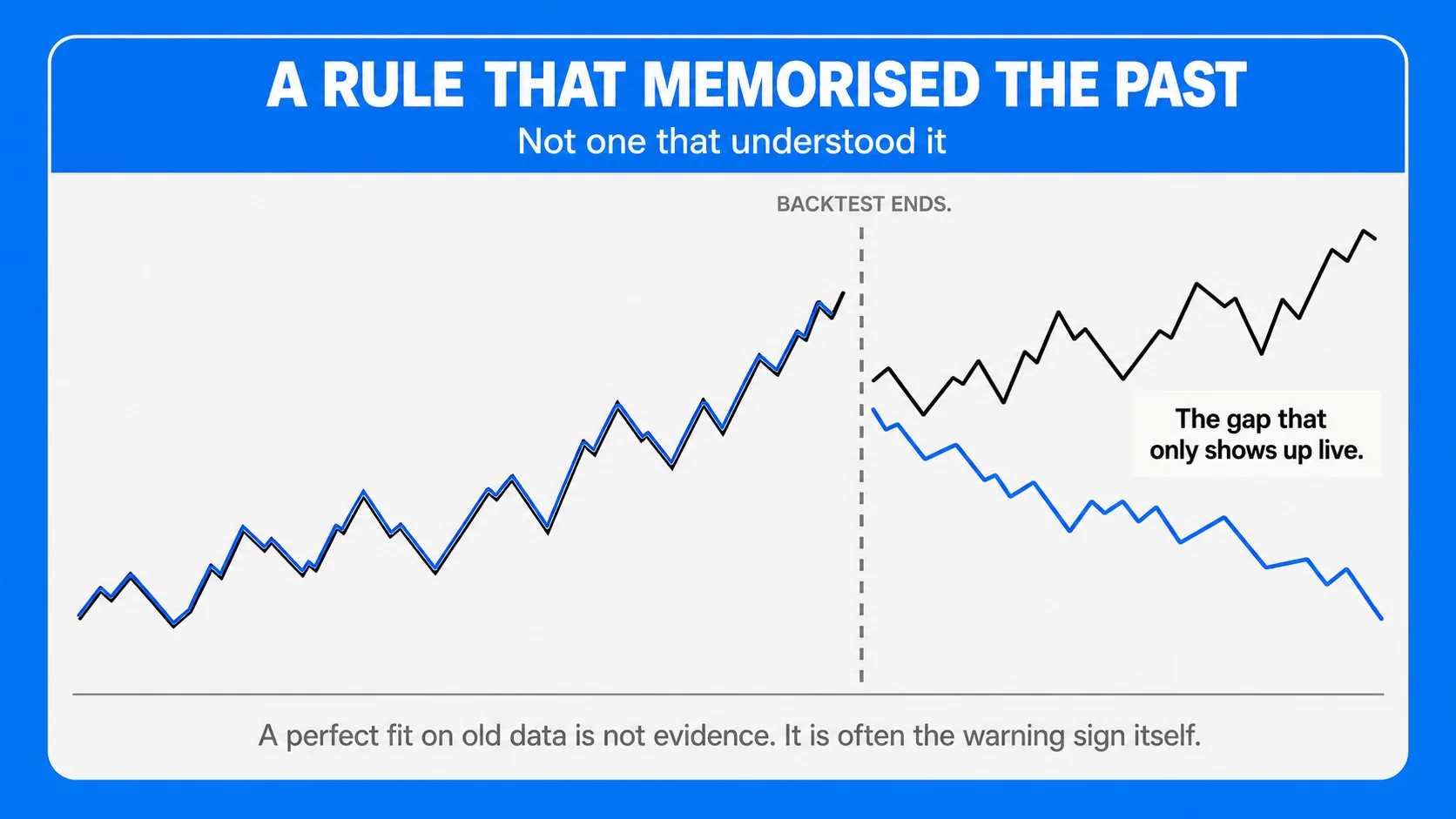
Automation removes emotional hesitation from order entry, but every financial risk in manual trading remains and new operational risks arrive with it.
- Market risk: a strategy suited to recent conditions can lose steadily when volatility or trend shifts.
- Technical failure: platform outages, internet drops and broker disconnections can leave positions unmanaged.
- Over-optimisation: rules tuned to fit historical data often perform worse on data they have never seen.
- Vendor risk: sellers of trading robots may advertise results no live account ever produced.
Past performance is not evidence of future results. An automated system can lose money, and no software removes that possibility.
Checking a Robot Seller Before Paying
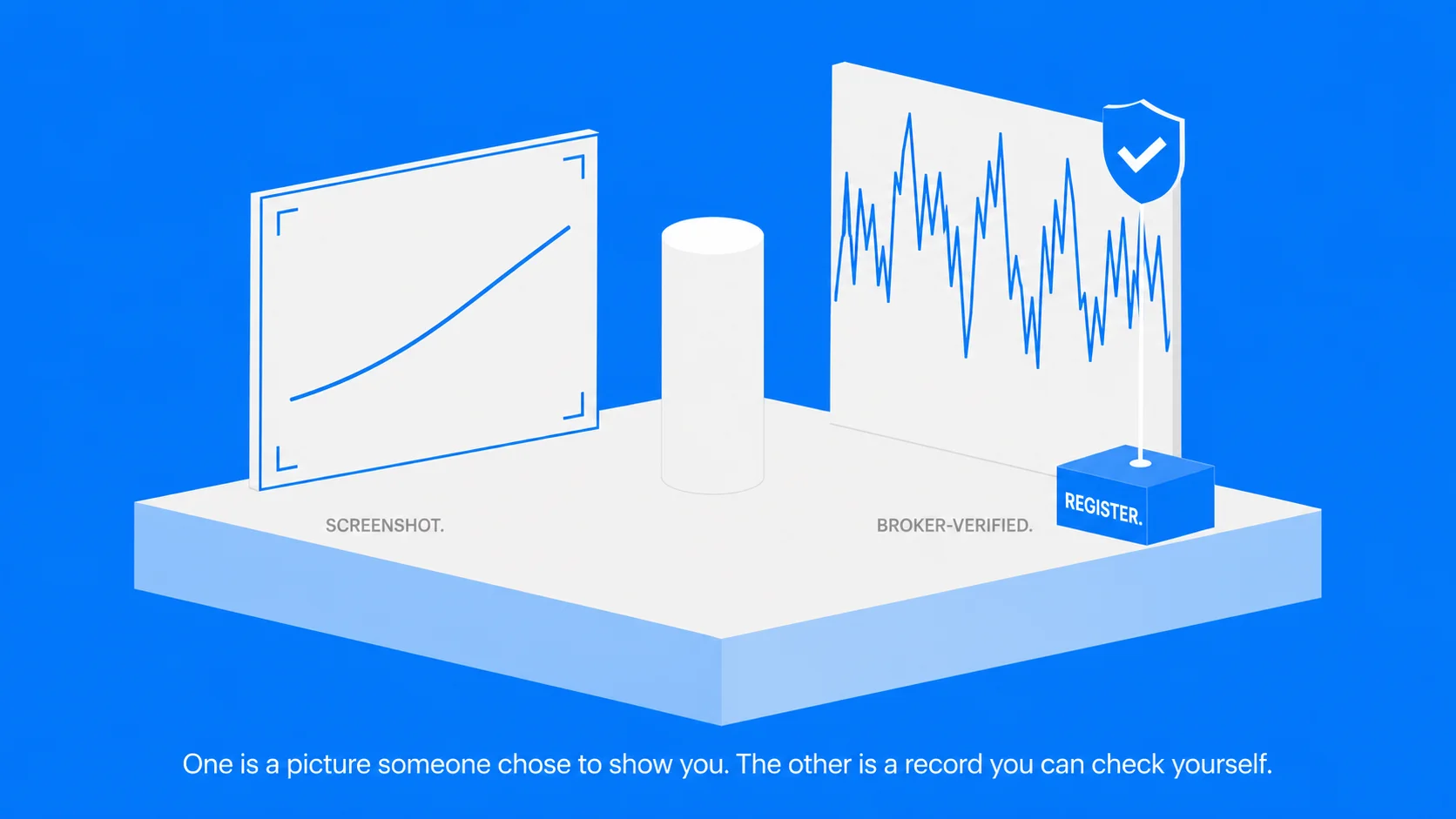
Ask for a broker-verified track record rather than screenshots, and treat any promise of guaranteed returns as disqualifying. Search the seller in IOSCO’s I-SCAN alerts network, which collects warnings from more than 150 regulators, then confirm authorisation with your own regulator. That check is the same discipline the strategy needs.
What Are the Benefits of Automated Forex Trading?
The discipline automation supplies is procedural: identical rules run the same way on every signal, whether the last trade won or lost.
- Consistency and speed: entries, exits and sizes follow written rules, and orders go out the moment conditions are met.
- Coverage: forex trades around the clock on weekdays, averaging $9.6 trillion a day in April 2025 (BIS Triennial Survey), so software watches sessions a trader sleeps through.
- Scale: one system can track several pairs, or several strategies, at once.
- Testability: rules written as code can be measured against historical data before capital is committed.
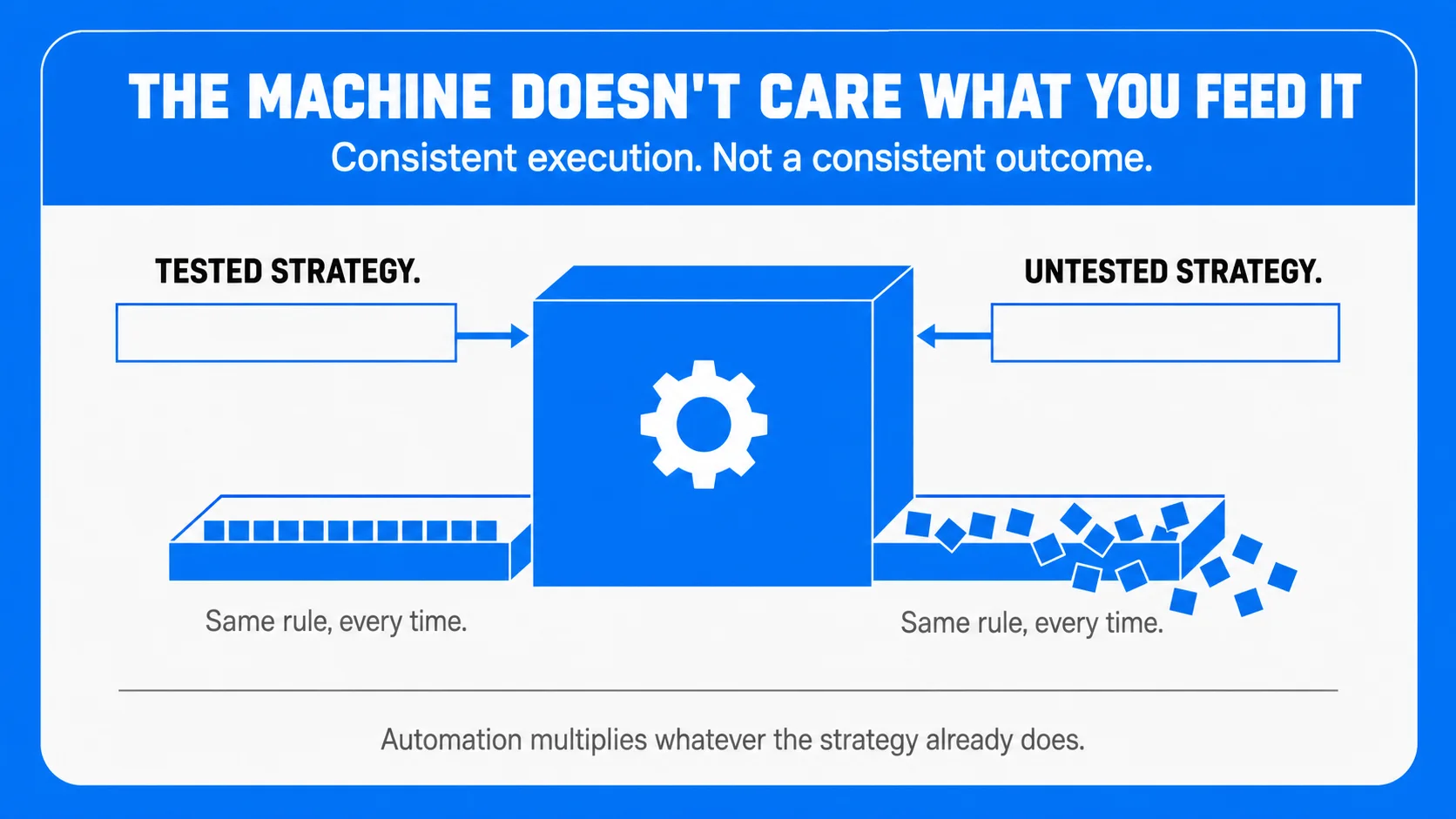
No advantage here improves a losing strategy, and each depends on the platform running it — as does each of the drawbacks that follow.
What Are the Disadvantages of Automated Forex Trading?
The disadvantages are mostly practical rather than dramatic: automation adds cost, upkeep and dependence on equipment, and it removes the judgement a person applies when conditions stop resembling the ones the rules were written for.
- Running cost: subscriptions, licences, VPS hosting, data feeds and wider spreads on high-frequency rules all come out of returns before a strategy proves itself.
- No context: the software reads its inputs and nothing else, so a central bank statement or a thin holiday session is invisible to it unless a rule says otherwise.
- Maintenance burden: parameters, broker conditions and platform updates drift, so a system left alone quietly stops matching the market it was built for.
- Equipment dependence: a home connection, a power cut or a laptop asleep can strand an open position, which is why unattended systems need hosting a trader must pay for and monitor.
- Over-trading: rules that fire on every qualifying signal can take dozens of small losing trades in choppy conditions, where a person would have stood aside.
- Opacity of third-party systems: with a purchased robot or a copied trader, the logic sits outside your view, so you cannot tell whether a losing run is normal for the strategy or a sign it has broken.
- False sense of security: automation is often sold as hands-off, and the belief that it needs no supervision is itself one of the more expensive disadvantages.
None of these argue against automation on their own, but together they explain why a tested system still needs an owner watching it.
What Types of Automated Forex Trading Platforms Exist?
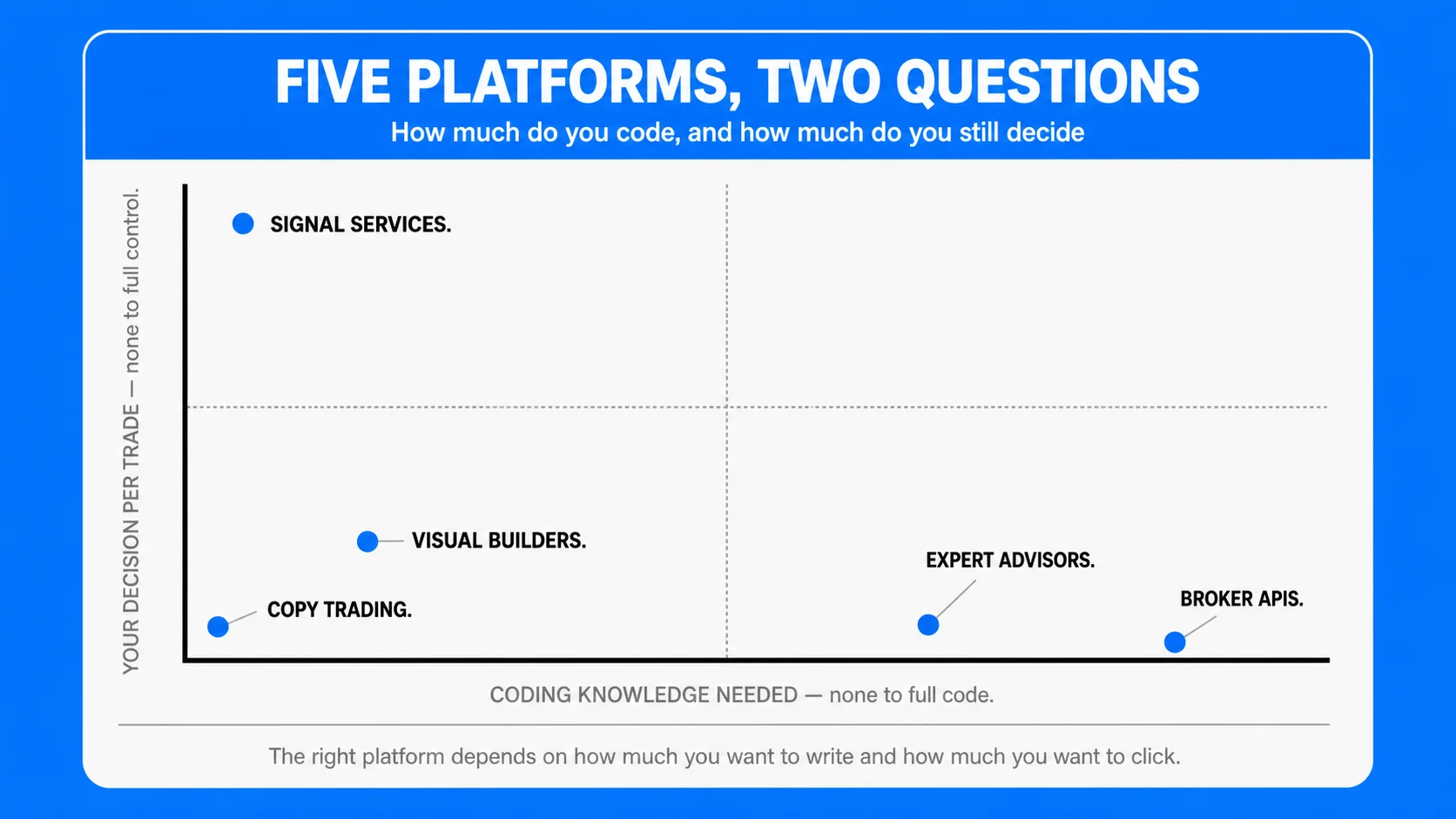
Platform categories sort by how much of the decision the software makes and how a trader accesses it.
| Category | Best fit | Automation level |
| Expert Advisors on MetaTrader | Rule-based traders willing to test | Full execution, trader-defined rules |
| Copy trading networks | Beginners following experienced traders | Full execution, another trader’s rules |
| Signal services | Traders keeping control of entries | Semi-automated, manual confirmation |
| Visual strategy builders | Non-coders building simple rule sets | Full execution, no coding needed |
| Broker APIs | Developers writing custom systems | Full execution, custom code required |
Expert Advisors and API systems ask the most preparation, since both need rules precise enough to run unattended, which is why backtesting matters most for those two.
How Do Traders Backtest an Automated Strategy?
Backtesting runs a strategy against historical price data to show how the rules would have behaved, which is useful evidence and weak proof.
- Write the strategy as exact rules covering entry, exit, position size and stop level.
- Select data spanning several market conditions, not only the recent trend.
- Run the platform’s strategy tester and record drawdown, win rate and trade count.
- Adjust one parameter at a time, since changing several hides which mattered.
- Forward-test on a demo account before committing capital.
A result that only looks good after heavy tuning describes the past rather than a working piece of software.
How Do You Choose an Automated Forex Trading Platform or Software?
Choosing software is a criteria exercise, not a search for one best product.
- Coding requirement: copy trading and visual builders need none, while MQL4, MQL5 or API work needs real programming.
- Cost transparency: weigh subscription fees, spreads, commissions and swaps together, since the total decides profitability.
- Testing access: a usable strategy tester and demo environment matter more than a large strategy library.
- Support and continuity: outages need answering, and VPS hosting keeps a system running when a home connection drops.
- Regulatory standing: verify the broker’s licence with your own regulator, then judge the software separately, since robot vendors and signal sellers are usually unregulated in their own right. A licensed broker is not an endorsement of what runs on its platform.
How Do Beginners Start With Automated Forex Trading?
A sensible order of operations puts learning ahead of any funded account. Start by understanding what a strategy’s rules actually instruct the software to do, then run that strategy in a simulated environment with virtual funds, where mistakes cost time instead of money. Expect the demo phase to take weeks, because a strategy has to meet several kinds of market before its results carry meaning. Traders who do not want to write rules usually start with copy trading, since the same demo-first sequence applies to a strategy someone else designed. A live sign-up makes sense only after that, and only with capital that can absorb a loss.
Do I Need Coding Experience to Use Automated Forex Trading?
No, beginners can use copy trading, pre-built Expert Advisors, or visual strategy builders without coding, while advanced customisation may require MQL4, MQL5, or similar programming knowledge. Reading a strategy’s rules still matters even when writing them does not.
Can I Manually Intervene While an Automated System Is Running?
Yes, most automated trading platforms allow manual intervention, modification, or closing of positions while an automated system remains active. Frequent intervention replaces tested rules with improvised decisions, which removes the reason to automate.
Conclusion
Treat sign-up as the last step rather than the first, because automation multiplies whatever a strategy already does, in either direction, and consistent execution is not the same thing as a profitable system. Whichever route suits you, examine the rules or the track record behind it, run the result with virtual funds until it holds across different market conditions, and only then judge whether live capital is warranted. For traders who would rather follow a strategy than build one, a copy trading account sign up with a broker whose licence you have verified is the practical next step.