What Is the Difference Between Investing and Trading?
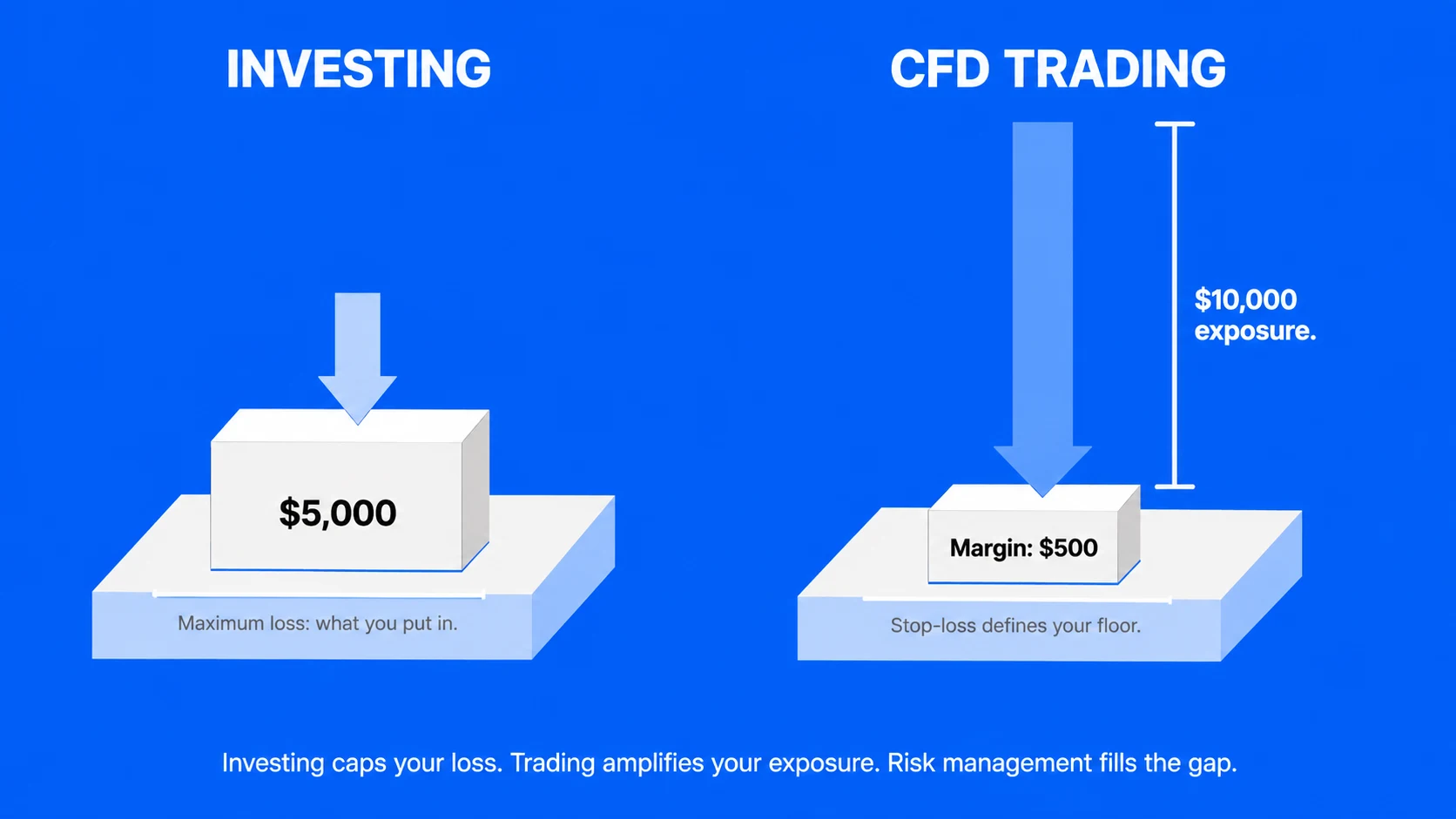
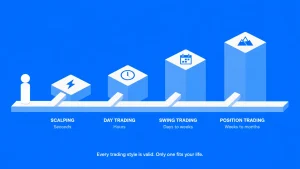
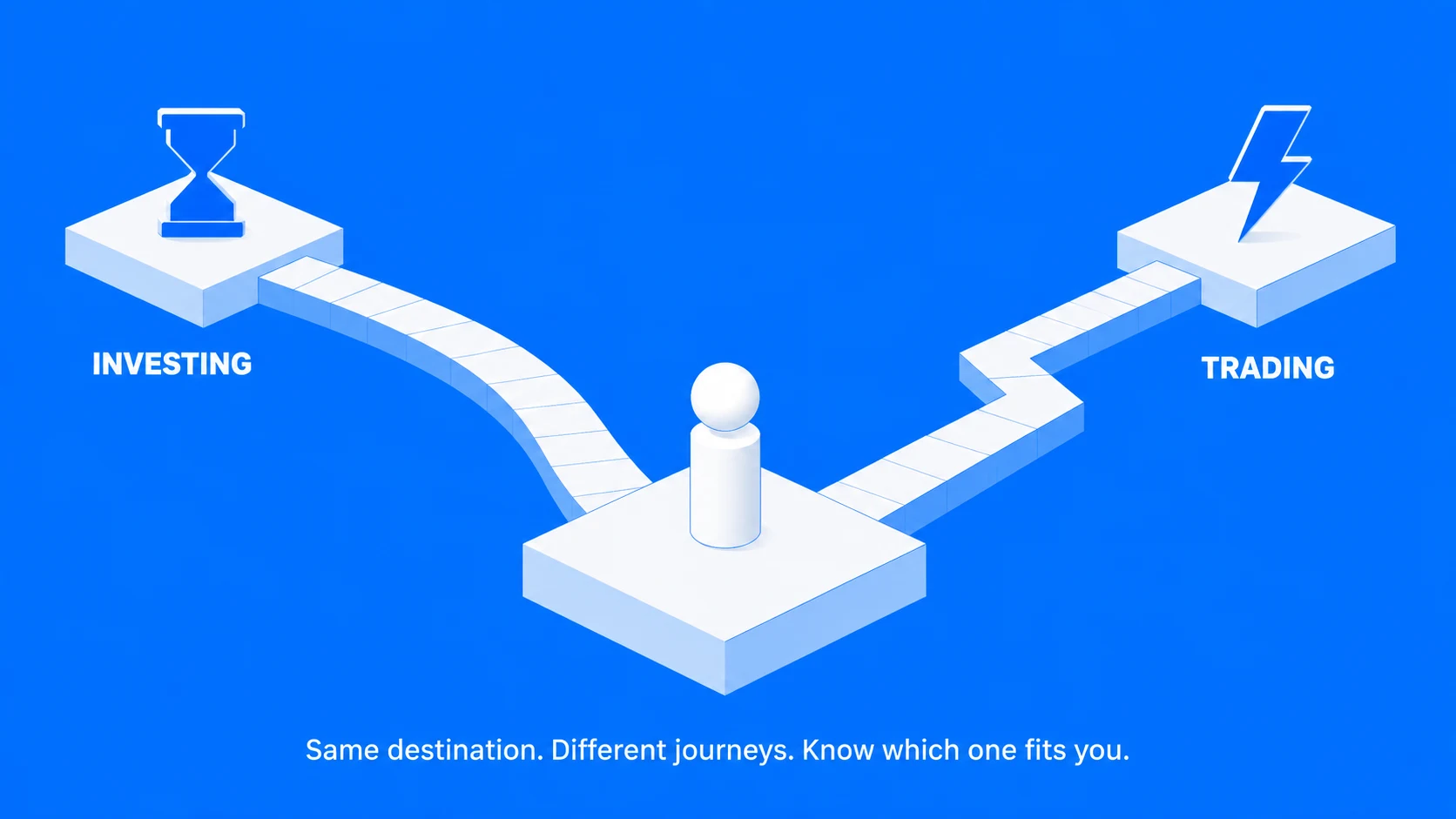
Your chosen time horizon defines the primary difference between these two strategies. Investing involves buying assets with the intention of holding them for years or decades, whereas trading focuses on buying and selling within seconds, days, or months.
| Dimension | Investing | Trading |
| Time horizon | Years to decades | Seconds to months |
| Primary goal | Long-term wealth building | Short-term profit from price moves |
| Analysis approach | Fundamental (company, economic) | Technical (charts, price patterns) |
| Risk profile | Lower, smoothed by time | Higher, especially with leverage |
| Time commitment | Low, periodic review | High, active monitoring |
| Typical tools | Stocks, bonds, funds, ETFs | Stocks, forex, crypto, derivatives |
| Tax treatment (varies) | Often benefits from long-term rates | Short-term rates are generally higher |
This difference in holding periods completely alters the overarching goal. Investors seek to capitalize on broad economic growth and compound returns, often using benchmarks like the S&P 500 or the MSCI World Index to measure long-term success.
Conversely, traders attempt to capture immediate profits from rapid price fluctuations regardless of the broader economic trend. Because trading operates in a compressed window, it naturally introduces a different level of risk.
How Does Risk Differ Between Investing and Trading?
The level of risk changes significantly based on how long you intend to hold an asset. Trading inherently carries a higher probability of loss because short-term positions can force participants to sell before a market recovery occurs, while long-term investing allows time to smooth out temporary volatility.
| Risk Factor | Investing | Trading |
| Market recovery | High probability over decades | Low probability in short windows |
| Loss compounding | Gradual, tied to asset value | Rapid, amplified by high frequency |
| Diversification | Broad, core protective strategy | Narrow, focused on specific setups |
| Leverage use | Rare | Common, multiplies exposure |
Is leverage the main reason trading is riskier, or does the short time alone drive it? While compressed timeframes amplify the impact of sudden market moves, reports from the International
Organization of Securities Commissions (IOSCO) highlight that leverage acts as the primary catalyst for rapid, outsized losses by multiplying market exposure. Because these dynamics differ so sharply, tax implications also diverge; in many jurisdictions, long-term holdings benefit from lower tax rates, but specific rules vary globally, meaning you must consult local regulations.
Mitigating these hazards requires structured risk management strategies tailored to your specific market analysis.
How Do Analysis Methods Compare Investing and Trading?
The methodology for market analysis splits into two distinct disciplines based on what drives asset prices over different periods. Investors rely on fundamental analysis to determine an asset’s intrinsic value, while traders depend on technical analysis to forecast immediate price action.
| Analysis Factor | Investing (Fundamental) | Trading (Technical) |
| Primary focus | Intrinsic company or asset value | Historical price and volume data |
| Key metrics | Earnings, revenue, economic data | Chart patterns, moving averages |
| Time sensitivity | Month to years | Minutes to days |
| Typical user | Long-term wealth builder | Short-term market participant |
Fundamentals take time to reflect in a market price, making economic data and corporate health the priority for multi-year holding periods. Conversely, technical indicators provide immediate signals necessary for capturing swift price movements. Blending both methods is rare for a single position because they serve entirely different holding periods and require vastly different allocations of time.
How Much Time and Effort Does Each Approach Require?
The amount of time required to manage capital effectively is one of the starkest contrasts between the two paths. Trading demands constant monitoring and immediate reactions to real-time events, while investing generally requires only periodic review.
| Effort Factor | Investing | Trading |
| Daily commitment | Minimal to none | Multiple hours |
| Research intensity | Deep initial, light ongoing | Continuous, real-time scanning |
| Monitoring frequency | Monthly or quarterly | Minute-by-minute or daily |
| Lifestyle impact | Passive, fits any schedule | Active, can function as a job |
A short-term approach requires active management because market conditions shift rapidly, meaning traders must dedicate significant hours to watching charts and news feeds.
Learning how to start trading successfully means acknowledging this intense schedule. Long-term portfolios operate passively, allowing the broader market to work in the background. Maintaining focus during these active hours requires immense emotional discipline.
What Role Do Emotional Demands Play When Choosing Between Investing and Trading?
Developing mental discipline serves as a critical, often overlooked differentiator for market participants. The fast feedback loop of short-term price movements triggers emotional reactions that passive, long-term holding naturally mitigates. Fortunately, these psychological challenges are not innate flaws but learnable skills you can master with structured practice.
- Revenge Trading: Attempting to immediately win back lost capital by taking larger, riskier positions, a habit that active participants must actively train to avoid.
- Analysis Paralysis: Becoming overwhelmed by numerous technical indicators, leading to hesitation when swift execution is necessary.
- Fear of Missing Out: Entering a market at its peak purely because the price is rising rapidly, a common emotional trigger that strict trading rules help control.
- Overconfidence: Increasing position sizes aggressively after a brief winning streak, which proper risk frameworks can keep in check.
Because emotional control is a developed skill, beginners often find the slower pace of long-term wealth building more forgiving while they evaluate their overall suitability.
Which Approach Suits Your Financial Goals and Personality?
Determining your suitability depends heavily on your personal goals, risk capacity, and daily availability rather than searching for a universal best option. Because there is no one-size-fits-all answer, you must evaluate your own circumstances across the key dimensions of market participation.
- Capital allocation: Can you afford to lose the specific funds you are dedicating to the market without impacting on your essential living expenses?
- Time availability: Do you have multiple uninterrupted hours each day to monitor charts, or do you need a hands-off approach?
- Psychological comfort: How do you react to sudden, short-term financial losses, and can you stick to a plan under pressure?
Answering these questions honestly provides clarity on which path aligns with your lifestyle. Regardless of the route you choose, applying these concepts in a practical setting requires the right platform.
How Can You Start Practicing Trading in a Low-Risk Environment?
Testing your strategy on a designated platform builds the analytical and emotional skills discussed earlier without exposing real capital to the market. UEXO is a modern financial trading brand focused on helping users understand financial markets through comprehensive educational resources and platform-based tools, including a simulated environment.
While specific tax rules, regulatory oversight, and investor protections vary significantly by country, utilizing virtual funds remains a universally sound starting point. To explore how these concepts compare in practice before committing actual capital, you can start with a demo trading account to navigate market dynamics without financial risk.
Does investing use buy-and-hold strategy?
Yes, long-term investing typically follows a buy-and-hold approach, with individuals holding assets for years or decades to benefit from compounding and broad market growth.
Can you blend investing and trading into one portfolio?
Yes, many market participants blend both by allocating a larger portion of their capital to long-term investments and a smaller, controlled portion to active trading, provided it matches their risk tolerance.
Does investing use buy-and-hold strategy?
Yes, long-term investing typically follows a buy-and-hold approach, with individuals holding assets for years or decades to benefit from compounding and broad market growth.
Can you blend investing and trading into one portfolio?
Yes, many market participants blend both by allocating a larger portion of their capital to long-term investments and a smaller, controlled portion to active trading, provided it matches their risk tolerance.
Conclusion
Managing risk effectively reveals that investing and trading are not inherently competing paths, but rather complementary tools serving entirely different financial objectives. You must clearly define your personal financial goals and honestly evaluate your risk capacity before deciding which strategy to pursue. Once you have aligned your strategy with your risk tolerance, take the next step and open a trading account.