What Is Trading?
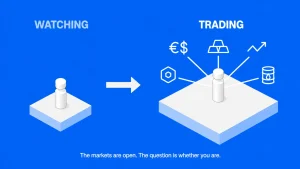
At its core, trading means buying an asset and selling it at a different price to capture the difference. The basics of trading apply across all asset classes: spot an opportunity, enter a position, manage risk, and exit according to a plan.
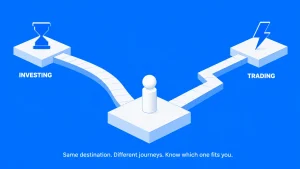
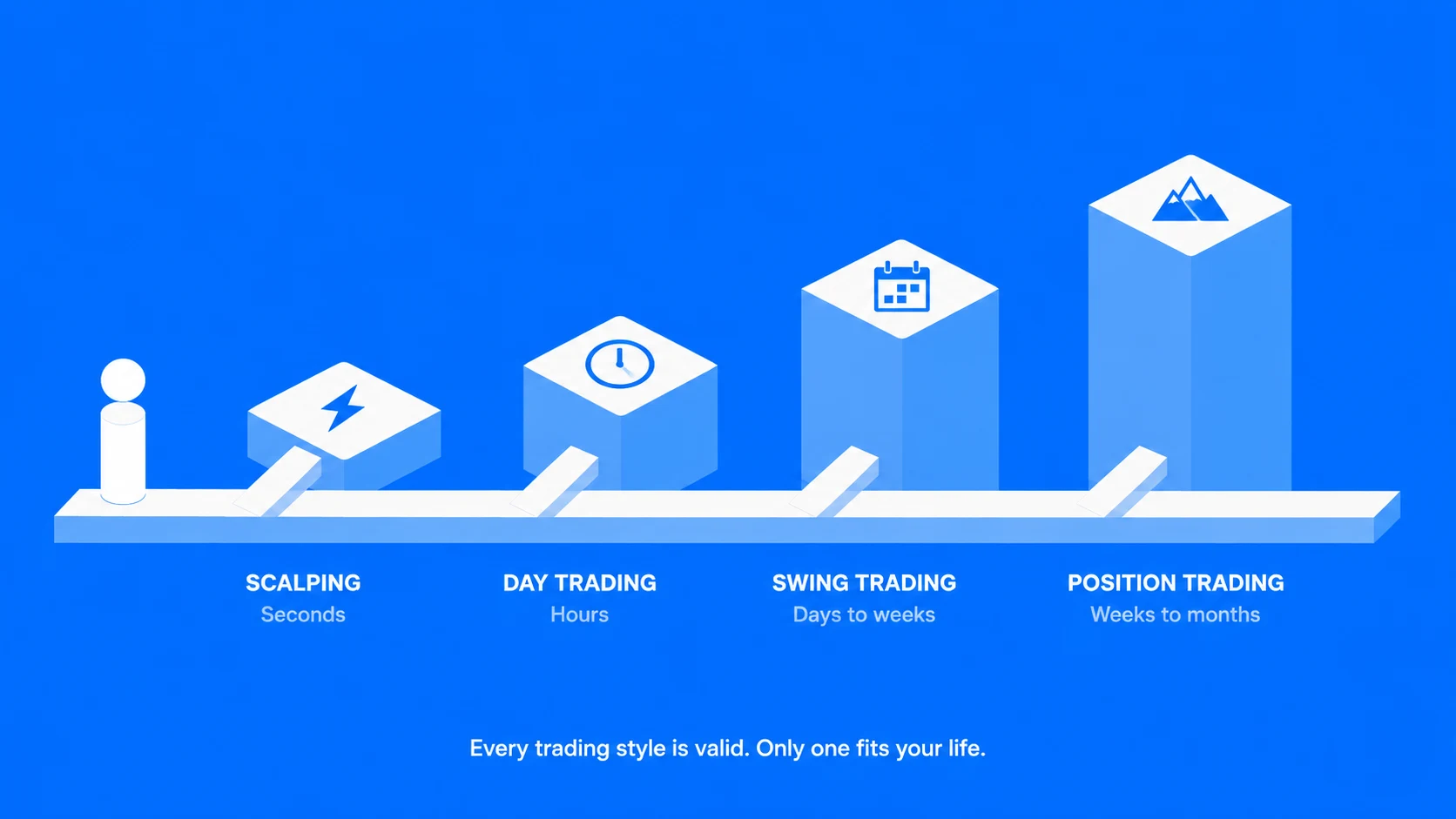
What separates trading from investing is intent. Investors buy and hold for years, betting on gradual growth. Traders actively target shorter-term price moves with a planned exit – minutes, days, or weeks out. Same markets, but trading demands more frequent decisions and closer market attention.
All trading involves speculation, meaning outcomes are uncertain. International investor-protection bodies consistently remind retail participants that profits are never guaranteed and that education should precede any commitment of capital.
What Is Day Trading?
Day trading means opening and closing all positions within a single trading session. No trades are held overnight, which eliminates the risk of price gaps that can occur between sessions.
Key pillars of day trading:
- Holding period: minutes to hours, never past the market close
- Trade frequency: multiple trades per day
- Risk level: high, due to rapid decision-making and leverage use
- Skill required: strong technical analysis, fast execution, emotional discipline
The goal is to profit from small intraday price fluctuations, compounding gains across many trades. Day traders typically spend several hours actively watching charts and managing orders. While some people attempt day trading part-time, the time commitment is substantial.
Most experienced day traders treat it as a near-full-time activity because research, monitoring, and execution all demand sustained attention. Beginners who find this pace overwhelming often look at styles that allow overnight holding.
What Is Swing Trading?
Swing trading involves holding positions for several days to a few weeks, aiming to capture a larger portion of a price move than a day trader would target.
Key pillars of swing trading:
- Holding period: days to weeks
- Trade frequency: a few trades per week
- Analysis style: technical analysis combined with awareness of broader trends
- Time pressure: lower than day trading; decisions can be made outside market hours
The difference in risk exposure compared to a day trade is worth noting. Because swing traders hold overnight, they face the possibility of price gaps between sessions. However, fewer total trades per week can reduce cumulative transaction costs, and the slower pace gives more time for analysis.
Swing trading tends to suit people who want active market participation without monitoring screens all day. Traders who prefer an even longer view often follow multi-month trends.
What Is Position Trading (Long-Term Trading)?
Position trading extends the holding period to weeks, months, or sometimes longer. Position traders focus on macroeconomic trends, company fundamentals, and broad market cycles rather than short-term price action.
Key pillars of position trading:
- Holding period: weeks to months (occasionally years)
- Trade frequency: very low, a handful of trades per quarter
- Analysis style: primarily fundamental, supported by long-term technical levels
- Patience required: high; short-term fluctuations are tolerated
Position trading sits closest to traditional investing on the spectrum, but it remains a trading approach because entries and exits are planned around changing conditions. A pure buy-and-hold investor may never sell, while a position trader actively decides when the original thesis no longer holds.
This style still requires risk management; “set and forget” without a plan can lead to significant drawdowns if conditions shift.
What is scalping?
Scalping targets tiny price movements – positions open and close within seconds to minutes, with traders placing dozens or hundreds of trades per session for a few ticks or pips each.
Key pillars of scalping:
- Holding period: seconds to a few minutes
- Trade frequency: very high, dozens to hundreds of trades per session
- Analysis style: price action, order flow, and level 2 data
- Attention required: intense, full focus during active market hours
It’s considered expert-level for good reason: sharp pattern recognition, strict discipline, and resilience to rapid losses are all required. Transaction costs and slippage can erode profits quickly at high frequency, making broker selection and execution speed critical.
Most beginners are better served starting with slower strategies before approaching scalping.
What is Momentum & Algorithmic Trading?
Beyond the core trading styles, two additional approaches are worth understanding.
Momentum trading focuses on assets that are trending strongly in one direction. Traders enter positions when price shows sustained movement – driven by volume, news, or market sentiment – and exit before the trend reverses. It works across multiple timeframes, from intraday to swing trading.
Algorithmic trading uses computer programs to execute trades automatically based on predefined rules – such as price levels, indicators, or statistical patterns. It can be applied to any strategy or timeframe and removes emotional decision-making from the process.
Both approaches require more than basic trading knowledge. Momentum trading demands strong discipline and the ability to read about market conditions quickly. Algorithmic trading requires either programming skills or access to reliable pre-built systems, plus ongoing monitoring and risk controls.
Neither is recommended for beginners without solid foundational experience.
What Are the Risks of Trading?
Trading involves the risk of losing all invested capital, regardless of which style you choose. International investor-protection bodies emphasis that retail traders face inherent disadvantages including information asymmetry and emotional decision-making. Understanding risk management in trading is essential before committing real money.
Common risks include:
- Leverage risk: borrowing to trade amplifies both gains and losses
- Emotional risk: fear and greed lead to impulsive decisions that override a plan
- Liquidity risk: in thin markets, exiting a position at the intended price may not be possible
- Overnight gap risk: prices can jump between sessions due to news or events
Stop-loss orders help limit losses by setting an intended exit point, but they do not guarantee execution at that price during fast-moving or illiquid conditions. Position sizing, which limits how much capital goes into any single trade, is another tool that can reduce exposure but does not remove risk entirely.
Specific protections and leverage limits vary by country. Verify local regulation before trading with live capital
Tax treatment of trading profits also differs by jurisdiction. Consult a local tax professional for guidance relevant to your situation.
Which Trading Style Is Right for You?
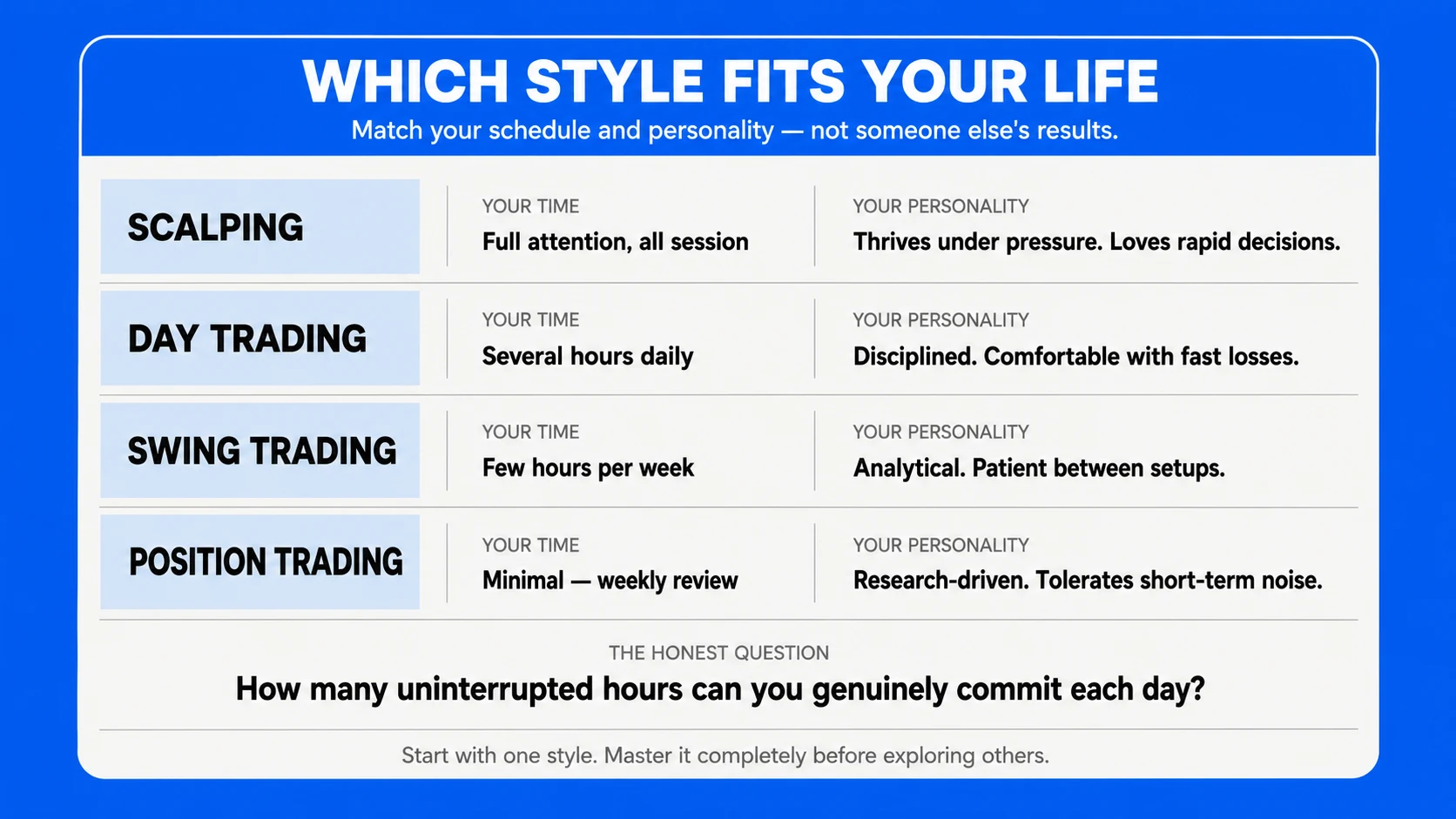
No single style is universally superior. The right choice balances your available time, capital, and personality:
- Limited free time (a few hours per week): swing trading or position trading, which rely on end-of-day or weekly analysis
- Several hours daily and high stress tolerance: day trading, though the learning curve is steep
- Preference for research over chart-watching: position trading, which leans on fundamental analysis
- Small starting capital: any style can work, but slower styles reduce the pressure of transaction costs on small accounts
Some experienced traders blend styles, but beginners benefit from mastering one approach before exploring others. Professional traders often specialise rather than diversify across multiple timeframes.
How Do I Start Trading as a Beginner?
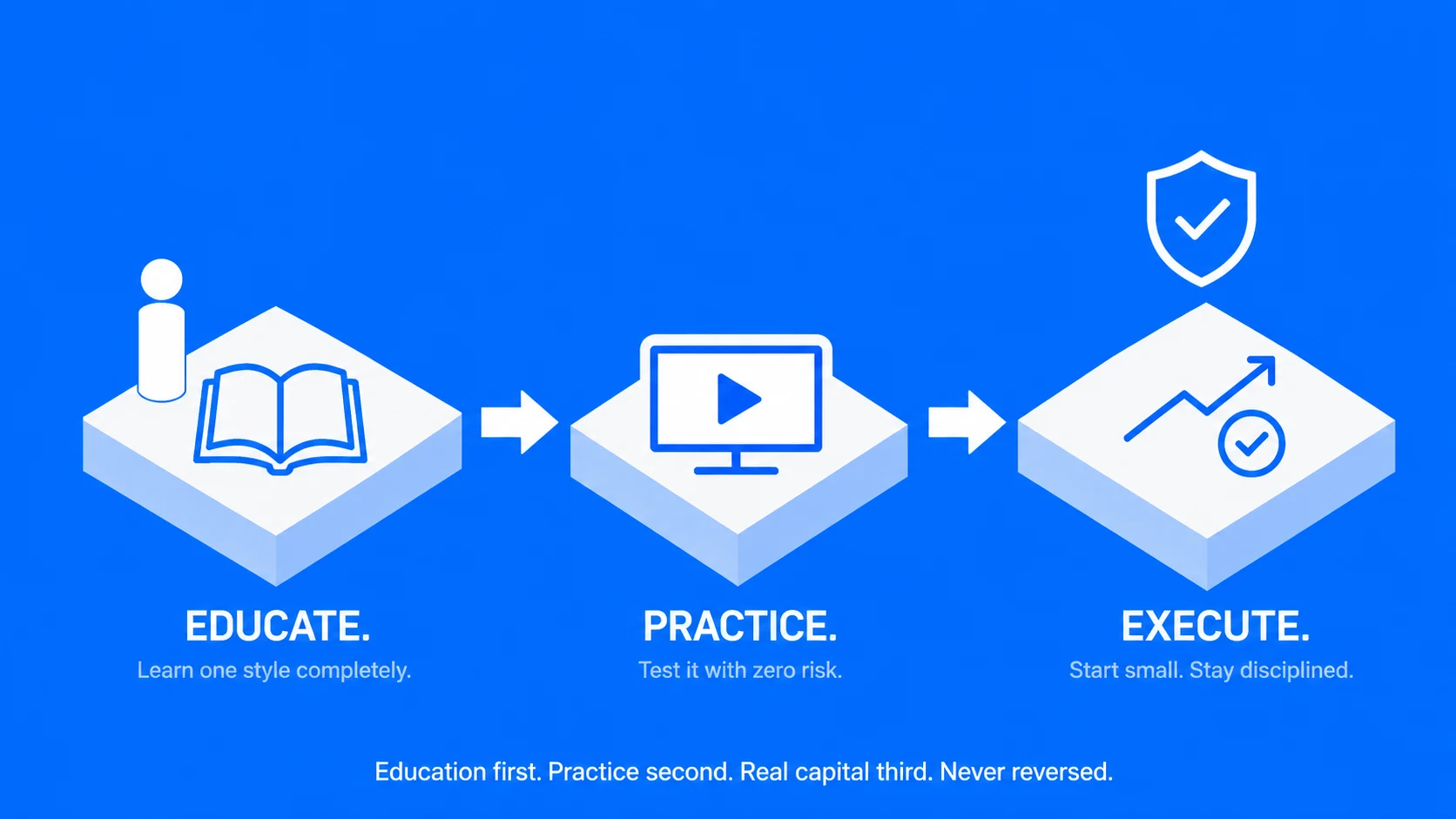
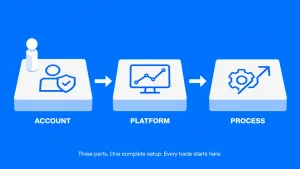
Starting requires three pillars: education, a plan, and practice. Live trading should begin only after you have tested your approach in a simulated environment. A practical path forward looks like this:
- Educate yourself on one chosen style and its mechanics
- Open a demo account to test strategies with virtual funds
- Create a personal trading plan with clear entry rules, exit rules, and risk limits
- Start with small amounts of real capital only when you feel consistently prepared
You can find a structured walkthrough in our guide on how to start trading.
How Does UEXO Support Your Trading Journey?
A good platform gives you education, a demo environment to practice, and clear fees. UEXO combines all three – pairing market education with real platform access so you build knowledge and experience together. If you’re still figuring out your trading style, it’s a solid starting point.
Explore the UEXO trading platform and see how it fits your goals.
Is there a "best" type of trading?
No. The best type depends on your time availability, risk tolerance, and personality. One style is not universally superior.
Can I trade with a small amount of money?
Yes. Many platforms allow small-capital trading, but risk remains proportional to your exposure. Only use money can you afford to lose.
Conclusion
Understanding the different types of trading turns a confusing landscape into a structured set of choices, each with defined timeframes and risk profiles. The next step is deciding which style aligns with your own schedule and comfort with uncertainty, then putting that knowledge into action. Open a trading account with UEXO when you are ready to apply what you have learned and begin your trading journey.