What is trading?
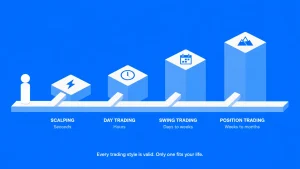
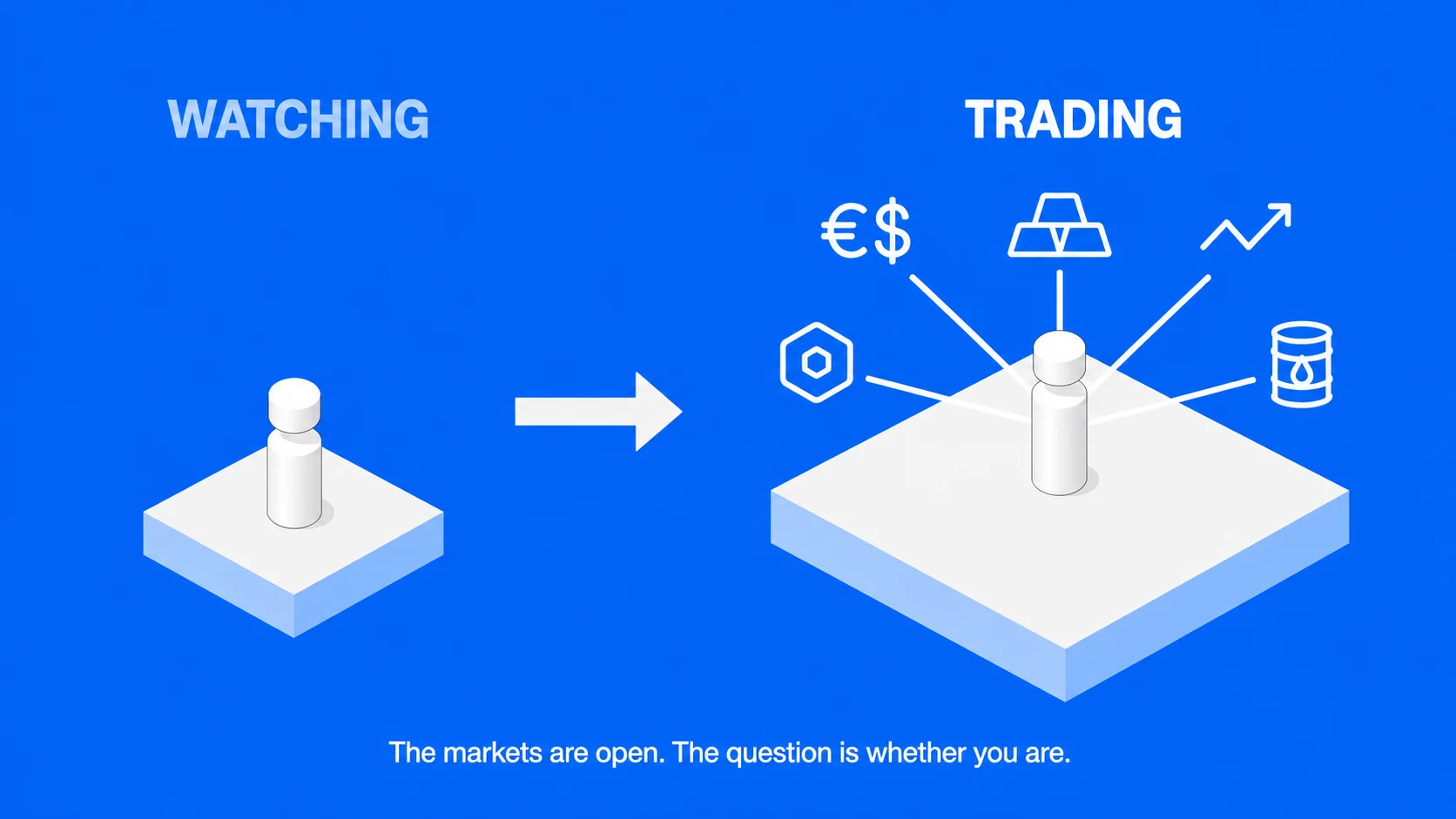
At its core, trading is the structured exchange of financial instruments to capitalise on price movements. A trader takes a position buying if they expect a price to rise, selling if they expect it to fall and closes that position when the price has moved in a favourable direction, realising the difference as profit. Timeframes can range from seconds in high-frequency strategies to days or weeks in position trading.
What makes an instrument tradable comes down to a few defining characteristics: it must have a current market price, enough active buyers and sellers, and enough liquidity to allow positions to be opened and closed without causing significant price disruption.
Exchanges and over the counter (OTC) markets provide the infrastructure for this continuous price discovery, whether for a listed stock or a currency pair. Importantly, retail traders commonly access markets through derivatives such as contracts for difference (CFDs), which allow speculation on price direction without taking ownership of the underlying asset. This broadens access considerably but also introduces leverage – a mechanism that amplifies potential outcomes in both directions, which is why understanding price movement is essential before trading with real capital.
How does trading work?
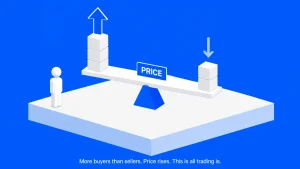
Price in any financial market is set by the continuous interaction of supply and demand. When buyers outnumber sellers, price rises; when sellers outnumber buyers, price falls. Economic data releases, corporate earnings, geopolitical events, and shifts in broader market sentiment all influence how participants reassess value and act on it.
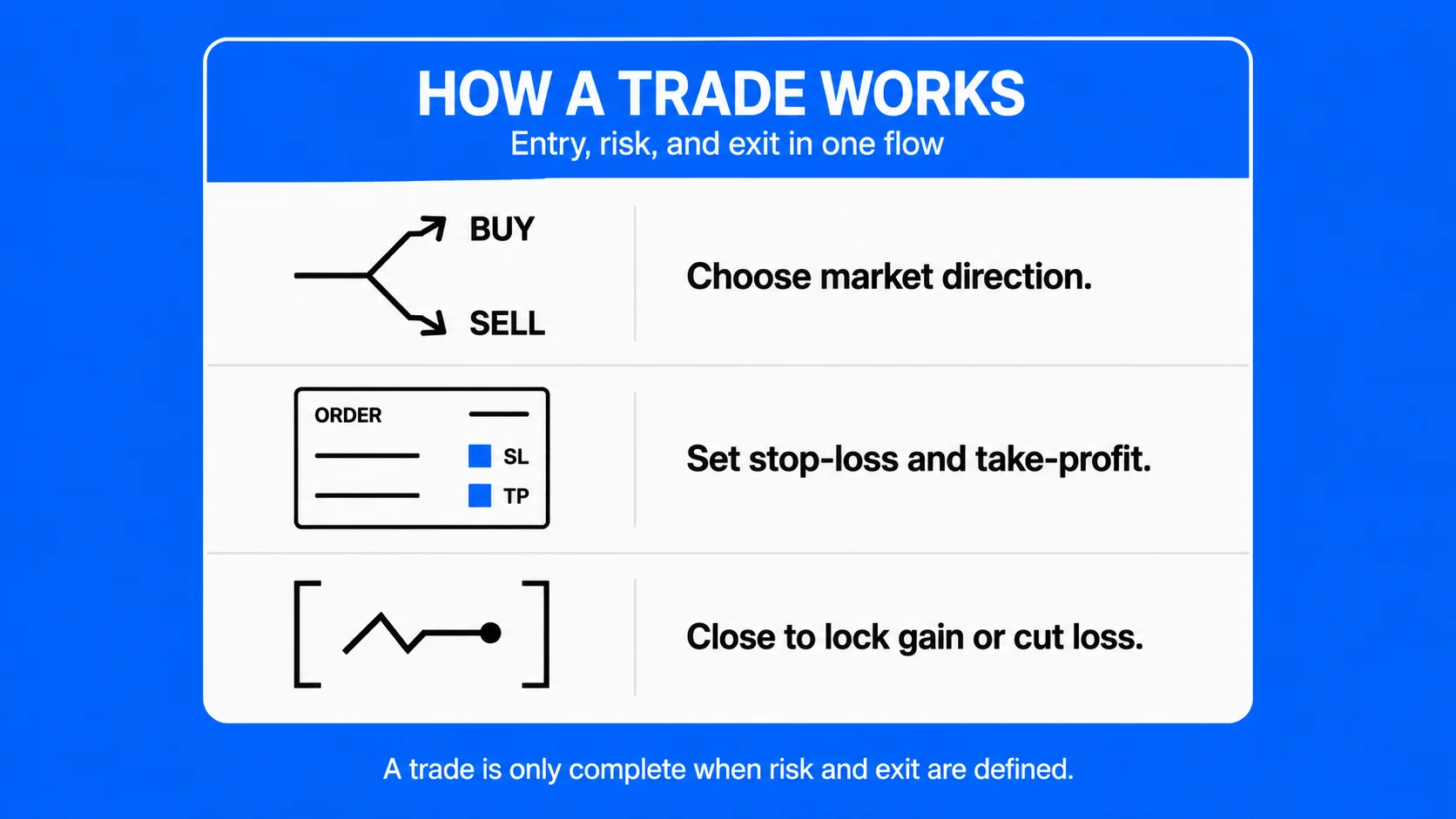
A trader’s workflow typically follows four stages: analysis, order placement, position management, and closing. When placing an order, the choice of order type matters practically. A market order executes immediately at the best available price, prioritising speed over precision. A limit order executes only at a specified price or better, giving the trader control over entry or exit at the cost of execution if the market does not reach that level. Tools such as stop-loss orders – which automatically close a position if price moves against the trader beyond a defined threshold – help contain exposure. Profit or loss is determined by the difference between entry and exit price, scaled by position size and any leverage applied. Managing risk means combining order discipline with a clear understanding of how leverage interacts with position size – considerations every trader encounters early.
What are the risks of trading?
Risk is not incidental to trading – it is inherent to it. The main categories a beginner should understand are:
- Capital loss – prices can and do move against open positions, resulting in real financial losses.
- Leverage risk – borrowed funds multiply both gains and losses; a small adverse move can eliminate a position rapidly.
- Market volatility – sudden price swings driven by news or economic data can exceed a trader’s planned tolerance.
- No guaranteed outcome – no strategy or tool removes the possibility of loss.
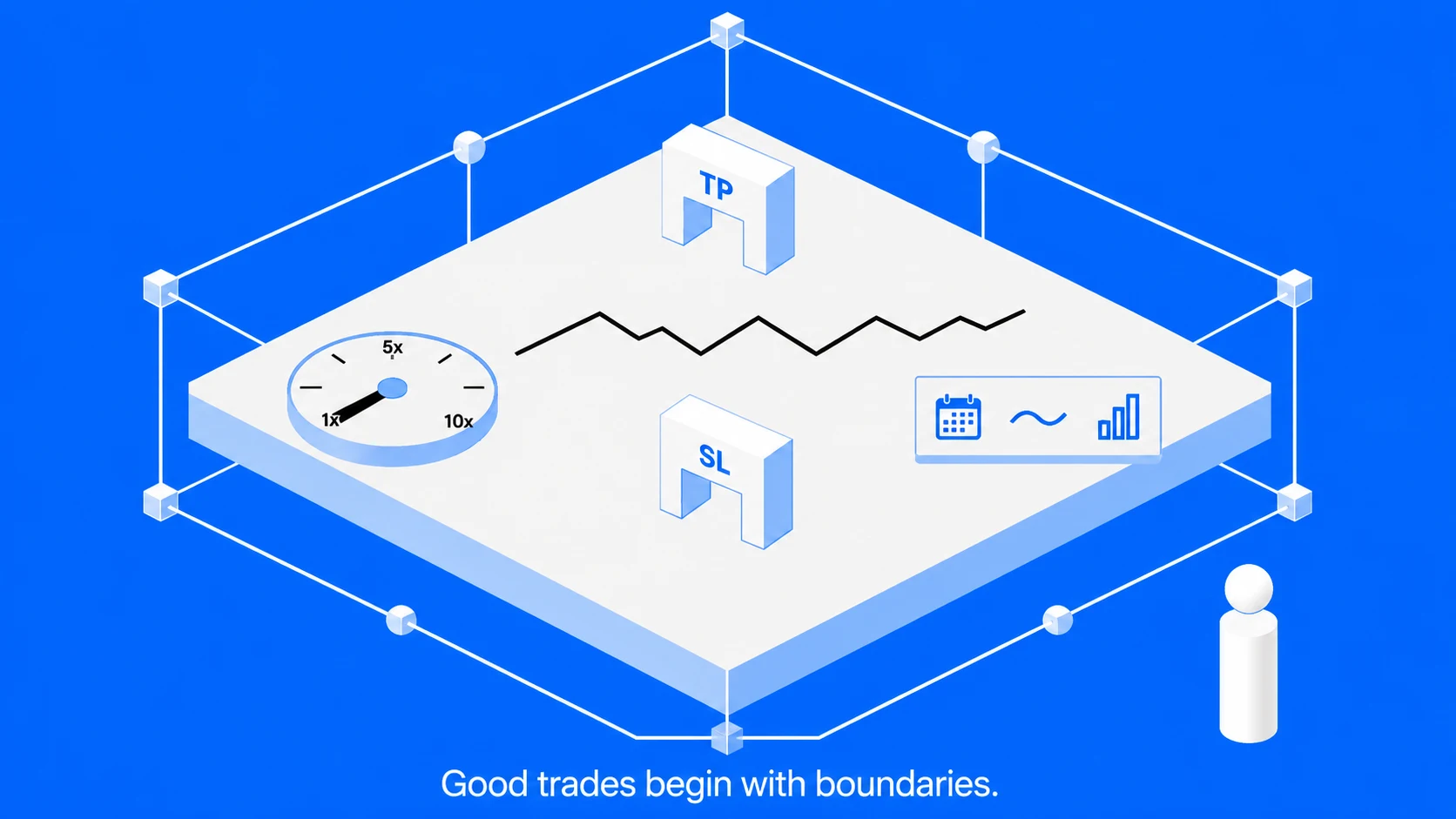
Risk management tools can contain but not eliminate these exposures. A stop-loss limits downside on a single trade, though sharp market conditions can cause execution at a worse price than the level set.
Position sizing – committing only a defined proportion of capital to any single trade – is a foundational discipline.
Using a demo account to practise before placing live trades builds both technical competence and emotional resilience without financial consequence.
Leverage can cause losses to exceed the initial deposit. Negative balance protection, which caps losses at the deposited amount for retail clients, exists in some jurisdictions but not universally; the rules depend entirely on where a broker is regulated.
Trading CFDs and other leveraged products carries a high risk of losing money rapidly. Many retail client accounts lose money. Understand the risks fully and never trade with money you cannot afford to lose. Regulatory frameworks governing market access differ significantly across countries. Whether a trader has recourse in a dispute, or whether their funds are held in segregated accounts, depends on the local regulatory environment. Checking a broker’s licensed status within a relevant market is a non-negotiable step before depositing any funds.
What assets and markets can you trade?
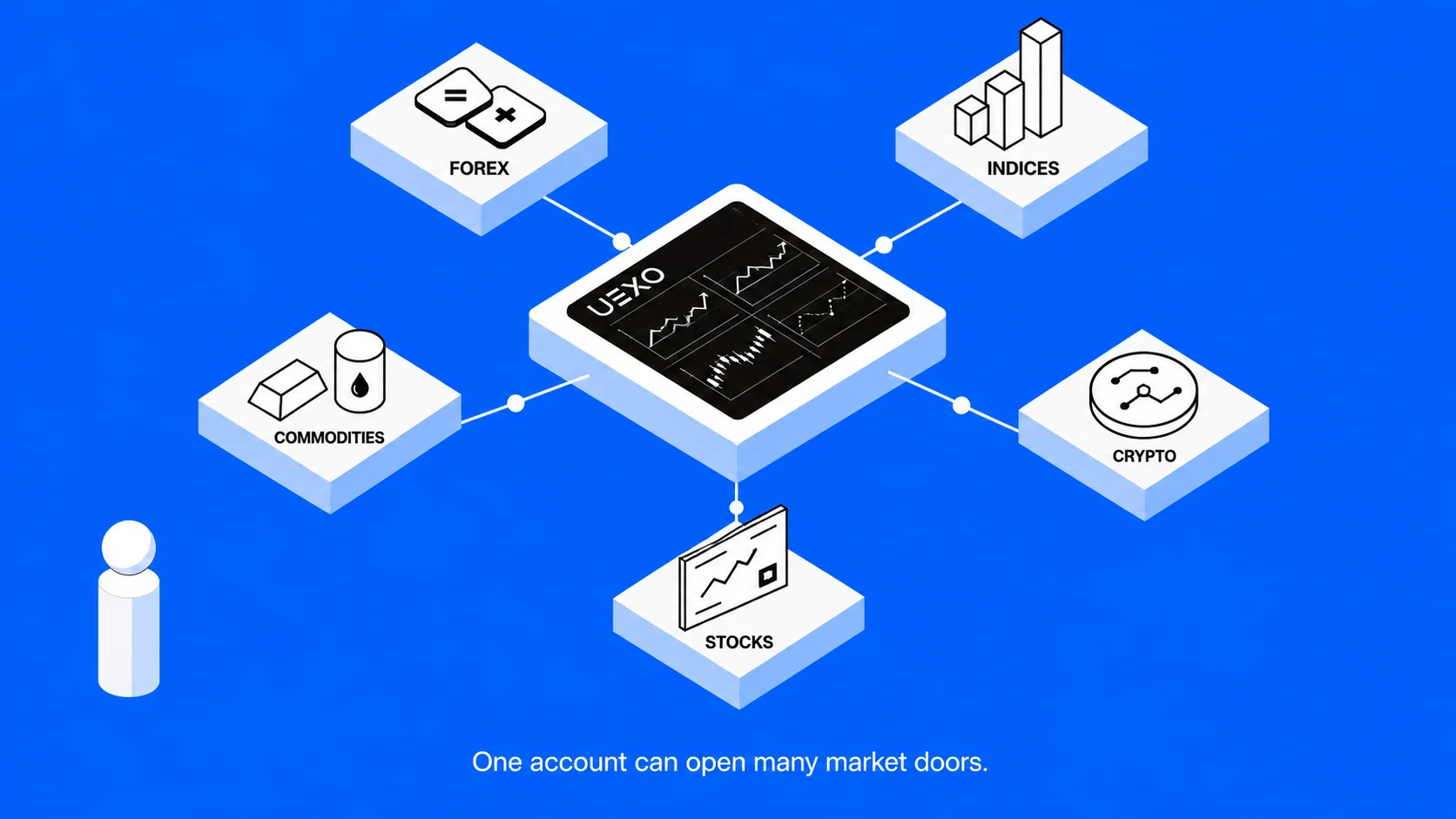
Financial markets are divided into asset classes, each with distinct characteristics, trading hours, and risk profiles. The main categories accessible to retail traders are:
- Forex – currency pairs such as EUR/USD or GBP/JPY, traded 24 hours a day across global sessions; the largest market by daily volume.
- Stocks and shares – equity stakes in publicly listed companies, traded during the operating hours of the relevant exchange.
- Indices – instruments that track the collective performance of a basket of stocks, offering broad market exposure without selecting individual companies.
- Commodities – physical goods including gold, crude oil, natural gas, and agricultural products, traded via spot or derivative contracts.
- Cryptocurrencies – digital assets available via dedicated exchanges or through CFDs on multi-asset platforms.
Retail access to most of these markets is typically provided through derivatives, with CFDs being the most common vehicle. Futures and options contracts offer alternative routes but carry additional complexity and are better suited to more experienced traders.
There is no single asset class that objectively suits all beginners. Forex offers high liquidity but significant short-term volatility; indices provide broader market exposure and are often more transparent for those new to price analysis. The right starting point depends on available capital, time commitment, and risk tolerance.
How do you start trading?
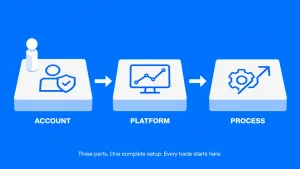
Starting with the right preparation reduces the risk of costly early mistakes. A structured approach looks like this:
- Learn the fundamentals – understand key terminology, how prices move, and the mechanics of the instruments you plan to trade.
- Choose a regulated broker – verify the broker holds a license from a recognised financial authority before opening any account.
- Open a demo account and practice – use a simulated demo environment to test strategies and build familiarity without risking real capital.
- Build a trading plan – define your risk tolerance, position sizing rules, and the criteria that guide entries and exits.
- Begin with limited live capital – once confident with the demo, commit only an amount you are genuinely prepared to lose.
- Review and adapt – track every trade, analyse outcomes, and refine your plan continuously.
Capital requirements vary by broker and instrument. Some platforms allow small starting deposits through micro-lot positions or fractional shares, but minimal capital restricts diversification and makes each trade carry disproportionate weight.
Evaluating a broker on regulation, usability, and educational support rather than promotional terms alone is the most durable approach to selecting a platform.
Trading vs investing - what's the difference?
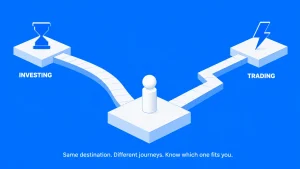
The approach each activity takes to financial markets differs substantially in timeframe, method, and purpose.
| Dimension | Trading | Investing |
| Timeframe | Short-term (seconds to weeks) | Long-term (years to decades) |
| Asset ownership | Often none – via derivatives | Directly owns the asset |
| Profit mechanism | Speculations on price direction | Price appreciation and dividends |
| Risk profile | Higher – leverage amplifies losses | Lower – typically diversified |
| Analysis style | Technical and fundamental | Primarily fundamental |
The two approaches are not mutually exclusive. Many individuals blend both – holding long-term positions while actively trading a portion of their capital in shorter timeframes.
Tax treatment adds another practical distinction: short-term trading gains are frequently taxed at a higher rate than long-term investment returns in many countries, though rules vary by jurisdiction and should be confirmed with a qualified local advisor.
If you want to explore this topic further, our guide on trading vs investing covers the key differences in detail.
Who trades and why?
Financial markets attract two types of participants: retail traders using personal capital through online platforms, and institutional players – banks, asset managers, hedge funds, and corporations – operating at scale for speculation or hedging. Both contribute to price discovery and liquidity.
Retail participation has grown significantly over two decades, driven by lower deposit requirements, mobile apps, and accessible education. In forex and CFD markets especially, collective retail activity can influence short-term price moves – though institutional volume remains dominant. Understanding this sets realistic expectations and highlights why platform choice and risk management matter at the individual level.
What role do retail traders play in financial markets?
Retail traders are now a meaningful part of modern markets, particularly in forex, stocks, and crypto. While institutions still drive most of the global volume, retail activity can move prices short-term during high-sentiment or news driven periods. Retail traders typically face an information gap versus professionals making structured education, disciplined risk management, and careful broker selection essential.
Which features matter when choosing a trading platform?
Platform choice affects execution quality, educational access, and trader protections. Key factors: regulatory status, usability, educational resources, and instrument range. A regulated broker offers materially stronger protection than an unregulated one. For beginners, demo accounts, mobile access, and reliable order execution are especially important.
All these factors come together in one place – Open trading account and get access to a platform built for beginners, combining real market access with built-in education covering price mechanics and risk management before any real capital is committed.
Is trading suitable for everyone?
The short answer is no – trading involves significant risk and requires time, discipline, and a genuine willingness to accept losses. Many beginners lose money, particularly when trading leveraged products.
Do you need higher capital to start trading?
Not necessarily – many brokers offer low minimum deposits or fractional positions but starting with too little capital limits diversification and increase the relative risk on each individual trade.
Conclusion
Building a solid understanding of market mechanics, risk, and instrument behavior is the most productive way to start. Practice in a structured environment consolidates that foundation before real capital is ever involved.
A UEXO demo account offers a simulated trading environment to do exactly that – and before moving to live trading, always verify the regulatory requirements that apply in your own jurisdiction.