First, the slightly awkward bit
You may not have been quite as good on demo as you remember.
There’s no solid research measuring how demo performance compares with live performance. You’ll find figures floating around online claiming paper accounts return several times what live accounts do but chase them back and none of them trace to a. Nobody has properly measured this.
There’s also a memory problem. Demo accounts are free and unlimited. If one goes badly, you reset it or open another, and that attempt quietly disappears from the story. The demo run you remember is usually the one that went well, because it’s the one that survived long enough to become a memory. Live accounts don’t work like that. You get one, and everything that happens to it stays on the record.
So, some of the gaps are real, and some of them are bookkeeping. Worth separating those before you conclude anything about yourself.
Now the part that’s genuinely real
Three things change the moment money is actually at stake, and all three are well documented.
Hypothetical money doesn’t engage the same machinery. Charles Holt and Susan Laury ran an experiment that gets at this neatly, published in the American Economic Review in 2002. They gave people a series of choices between a safer bet and a riskier one, then scaled the stakes up by 20, 50 and 90 times. When the larger amounts were hypothetical, people’s choices barely moved. When the same amounts were paid in actual cash, they became sharply more cautious.
The interesting part isn’t that bigger stakes make people careful. It’s that imaginary stakes don’t, however big the number on the screen. A demo balance of 100,000 doesn’t feel like 100,000. It feels like a number. Worth adding that a later comment on the study argued the design had an order effect that muddies the result, so treat it as strong evidence rather than settled fact.
Losses weigh more than gains. This is the loss aversion finding from Kahneman and Tversky, and the commonly quoted figure puts a loss at roughly 2.25 times the emotional weight of an equivalent gain. A 2024 meta-analysis found the number varies a great deal between individuals, with some people showing very little loss aversion at all, so don’t take 2.25 as your personal setting. But the direction holds for most of us.
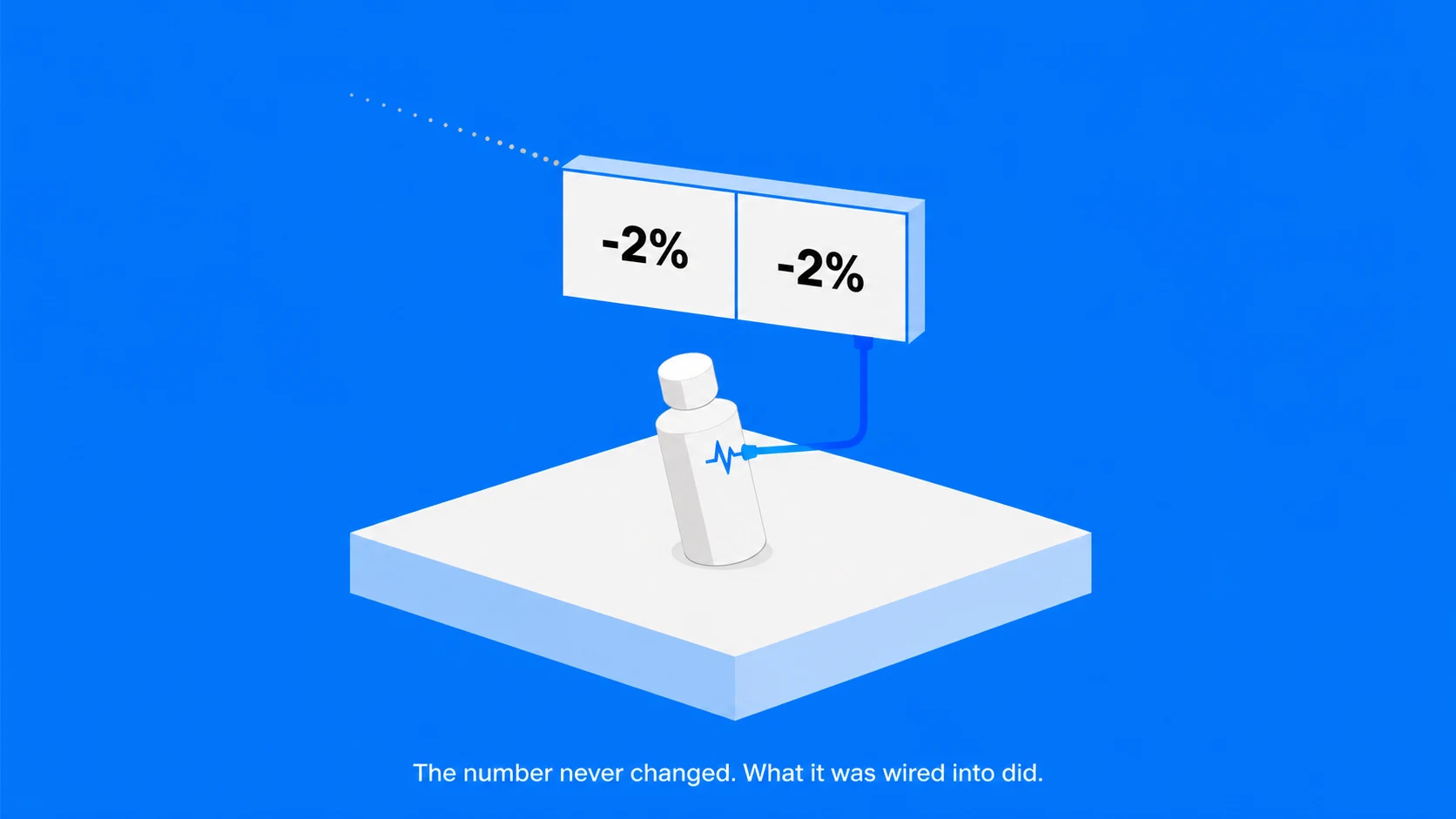
On demo, a 2 percent drawdown is a data point. Live, the same 2 percent carries roughly double the weight, and that extra weight is what makes you close a good trade early and hold a bad one late.
Your body gets involved before you do. Andrew Lo and Dmitry Repin wired up ten professional traders during actual trading sessions and measured what happened, publishing in the Journal of Cognitive Neuroscience in 2002. Skin conductance shifted measurably during sudden market moves. Cardiovascular readings changed during volatile periods. These were experienced professionals, and their bodies were reacting to price before any conscious decision got made. A later study put wristbands on 55 traders at a global institution across full trading days and found much the same thing.
Here’s the encouraging part, and it’s the finding I’d hold onto. Lo and Repin saw meaningful differences between traders, and those differences looked connected to how experienced they were. The reaction doesn’t vanish, but it settles down. What you’re feeling in month one isn’t a permanent character flaw. It’s a normal response that gets quieter with repetition.
The bit almost nobody mentions
It probably wasn’t the same account.
Demo balances are usually handed out at 10,000 to 100,000. Most people fund a first live account with rather less than that. So even if you traded identical lot sizes, the percentage of your account at risk on each trade was completely different. You didn’t take your strategy live. You took a differently sized version of it live, and position size is where most of the outcome lives.
Execution differs too. Demo servers generally fill instantly at the quoted price, with tight spreads, no requotes and no partial fills. That isn’t a trick, it’s just how a simulated server works when there’s no actual liquidity to source, and brokers disclose it in their risk documentation. Live, you meet slippage and variable spreads, particularly around news. On a strategy taking a lot of small trades, that difference alone can be the whole edge.
Demo did the job it was built for
This is the part I’d want anyone starting out to hear.
A demo account is excellent at what it was designed for. It teaches you the platform, lets you check whether your strategy logic makes sense, and lets you make expensive-looking mistakes for free. Those are real things, and being green on demo means the logic held up under conditions with no friction in them.
What was never built to test, is you. It can’t, because the thing that makes live trading hard is precisely the thing demo removes. So, you didn’t fail the test you passed. You passed one test and then sat on a different one you’d never revised for.
What actually helps
Go small and real rather than large and simulated. A live account you’d be comfortable losing entirely teaches you more in a month than a demo does in a year, because it engages the machinery that demo can’t reach. Small and real beats big and imaginary.
Size so the loss is boring. The practical test is simple: if a loss would make you want to look away from the screen, the position is too big. On demo you never had to check, because no size was uncomfortable.
Log your fills for a month. Note the price you expected against the price you got, trade by trade.
Write your rules when you’re flat. The version of you that sets sensible rules and the version that’s down 3 percent are not the same person. Put the rules somewhere the second one can’t renegotiate them, which usually means a bracket order rather than a good intention.
Expect the physical reaction and don’t read too much into it. Professionals show it on the monitors too. It’s not evidence you’re unsuited to this. It’s just what a person looks like when something is genuinely at stake.
You weren’t kidding yourself on demo. You were running a different experiment, with a different account size, different fills, and none of the pressure. Knowing which parts of that gap are real is most of what closes it.
Ready to see how your strategy holds up when the stakes are real? Take the next step and open a live UEXO account here.
Trading foreign exchange and leveraged derivatives (CFDs) involves significant risk and is not suitable for all investors. Leverage increases both gains and losses. You do not own the underlying assets and may lose all invested capital. This article is general information rather than personalized financial advice, and does not take account of your individual objectives or circumstances. Past performance does not guarantee future results.