Is the Broker Regulated?
Regulation is the single most important factor when evaluating any broker. A regulated broker operates under rules set by a recognised financial authority, rules designed to protect your money, enforce fair pricing, and provide legal recourse if something goes wrong.
Regulatory bodies relevant to traders in the Middle East and North Africa:
| Regulator | Country/Region |
| SCA (Securities and Commodities Authority) | UAE |
| CMA (Capital Markets Authority) | UAE |
| DFSA (Dubai Financial Services Authority) | Dubai (DIFC) |
| FSRA (Financial Services Regulatory Authority) | Abu Dhabi (ADGM) |
| CMA (Capital Market Authority) | Saudi Arabia |
| FRA (Financial Regulatory Authority) | Egypt |
| QFCRA (Qatar Financial Centre Regulatory Authority) | Qatar |
| CBB (Central Bank of Bahrain) | Bahrain |
Top-tier regulatory bodies worldwide include:
| Regulator | Country/Region |
| FCA (Financial Conduct Authority) | United Kingdom |
| ASIC (Australian Securities and Investments Commission) | Australia |
| CySEC (Cyprus Securities and Exchange Commission) | Cyprus / EU |
| BaFin (Federal Financial Supervisory Authority) | Germany |
| FSCA (Financial Sector Conduct Authority) | South Africa |
| FSC (Financial Services Commission) | Mauritius |
What matters is not just that a broker claims to be regulated, but that you can independently verify the licence on the regulator’s official website.
Red flags to watch for:
- No regulatory information published on the website
- Regulation only from jurisdictions with no meaningful investor protection framework
- Licence numbers that cannot be verified independently
- A licence narrower than it appears: some entities are authorised only to promote and introduce, not to hold funds or execute trades
Always confirm which entity will hold your funds and execute your trades, and where that entity is licensed.
What Are Fees and Spreads?
Every broker makes money somehow. Understanding the full cost structure before you deposit is essential, because fees accumulate over time and directly reduce your net returns.
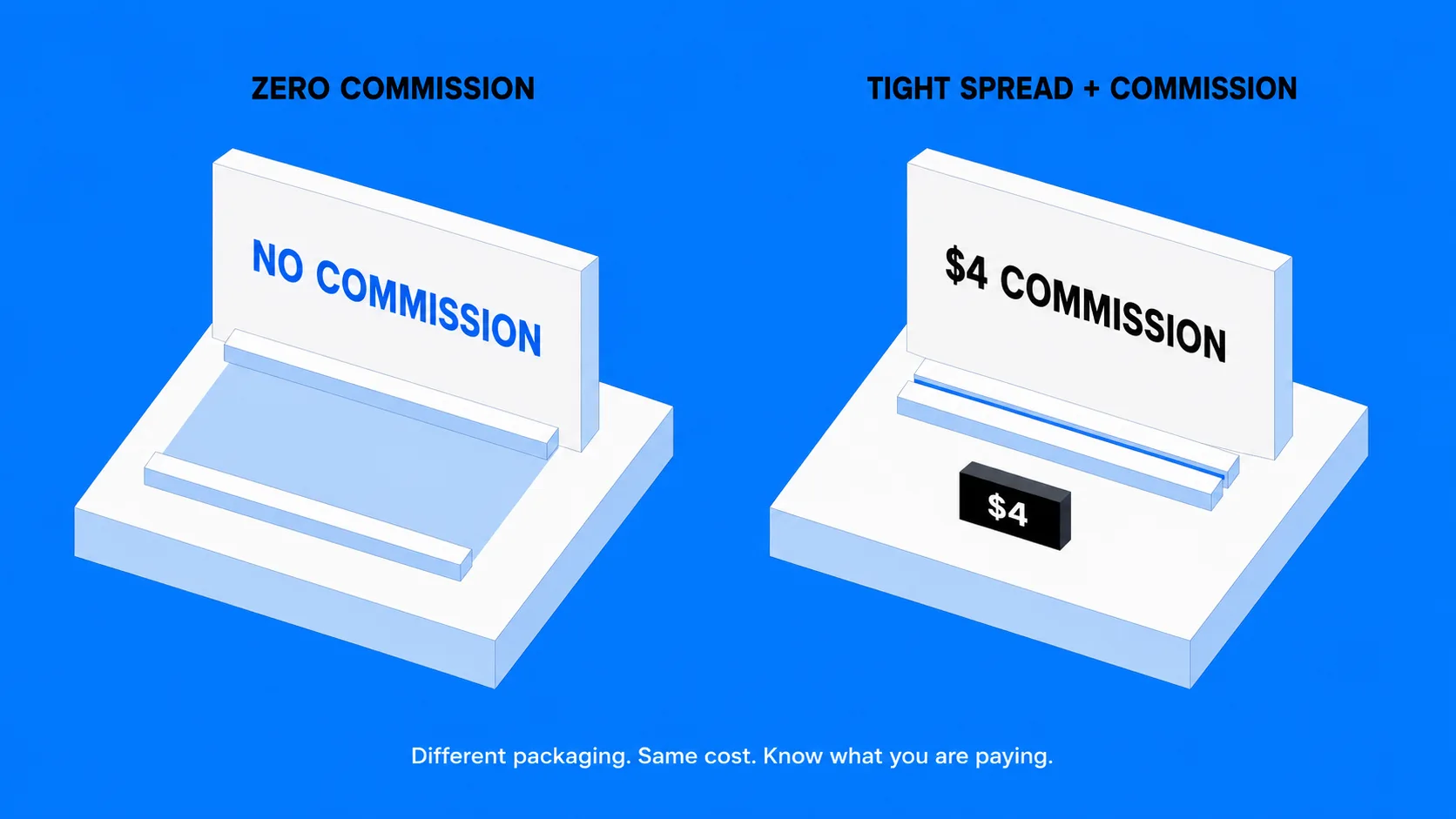
Types of broker fees:
| Fee Type | What It Means |
| Spread | The difference between the buy and sell price, the most common fee in forex and CFD trading |
| Commission | A flat charge per trade, common on ECN/Raw accounts |
| Swap / Overnight fee | Charged when you hold a position open past the daily rollover |
| Deposit / Withdrawal fee | Some brokers charge for moving funds in or out |
| Inactivity fee | Charged if your account sits dormant for a defined period |
A broker advertising “zero commission” often recovers the cost through wider spreads. A broker charging commission typically offers tighter spreads. Neither model is inherently better: it depends on your trading frequency, position size, and style.
For active traders, tight spreads on major pairs like EUR/USD, GBP/USD, and USD/JPY matter most. For position or swing traders, swap rates become the bigger ongoing cost, so check whether swap-free accounts are available and on what terms.
View UEXO’s account types to compare spreads and trading costs across different account tiers.
What Assets Can You Trade?
A good broker gives you access to the markets you actually want to trade. Before committing, verify that the broker covers the instruments relevant to your strategy.
Common asset classes offered by CFD and forex brokers:
- Forex: major, minor, and exotic currency pairs (EUR/USD, GBP/JPY, USD/ZAR, and others)
- Commodities: gold, silver, crude oil (Brent and WTI), natural gas
- Indices: S&P 500, NASDAQ 100, FTSE 100, DAX 40, Nikkei 225, and others
- Stocks: CFDs on individual company shares from global exchanges
- Cryptocurrencies: Bitcoin, Ethereum, and other digital assets (availability depends on jurisdiction)
Gold and oil carry particular weight for traders in this region, so check spreads and trading hours on those specifically rather than assuming forex-pair pricing applies across the board.
If your strategy spans multiple markets, a multi-asset broker removes the complexity of managing separate accounts with different providers.
UEXO’s markets span forex pairs, global indices, commodities, and more, giving traders access to a diverse range of instruments from a single account.
What Trading Platform Does the Broker Offer?
Your trading platform is the tool you use for everything: executing trades, reading charts, managing risk, and monitoring open positions. It needs to be fast, stable, and suited to how you trade.
MetaTrader 4 (MT4) remains the most widely used retail trading platform globally. It provides:
- Advanced charting with multiple timeframes and dozens of technical indicators
- Expert Advisors (EAs) for fully automated trading strategies
- A large global community of developers, scripts, and custom tools
- One-click trading and flexible order types
MetaTrader 5 (MT5) is the next-generation platform from the same developers, adding:
- Access to more asset classes including stocks and futures alongside forex and CFDs
- Additional pending order types and an integrated economic calendar
- Improved strategy backtesting and multi-currency testing
- Depth of Market (DOM) data for greater execution transparency
Both MT4 and MT5 are available as desktop applications, web browser terminals, and mobile apps, making it possible to monitor and manage trades from any device.
UEXO supports both MT4 and MT5, giving traders the freedom to use whichever platform fits their approach.
What to check in a trading platform
- Execution speed and stability during high-volatility events (NFP, central bank decisions)
- Mobile app quality: full account management, not just a viewing tool
- Order types available: market, limit, stop-loss, trailing stop
- No excessive requotes or slippage during normal and fast market conditions
- Server time versus your local time: most MT servers run on a GMT+2 or GMT+3 offset, which determines when daily rollover and swap charges actually reach your account
How Are Your Funds Protected?
Fund protection is what separates brokers that are genuinely trustworthy from those that are merely licensed on paper. Before depositing, understand exactly what safeguards are in place.
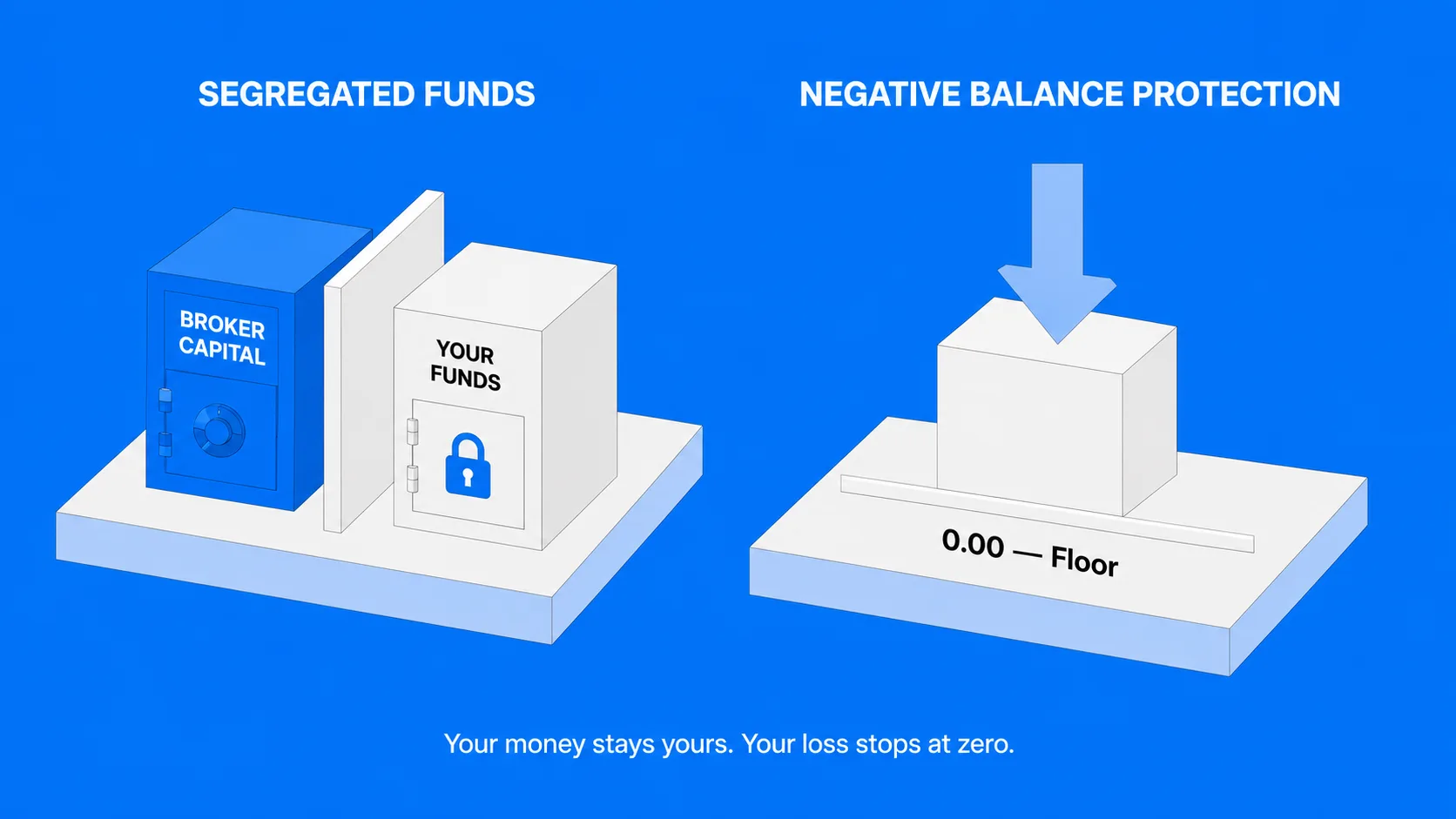
Key client fund protections to look for:
Segregated accounts. UEXO holds client funds separately from its own operating capital where required by regulation, adding a layer of protection to your deposits.
Negative balance protection. Your account cannot fall below zero, even if a position moves heavily against you in a fast market. Your maximum loss is capped at your deposited amount.
Investor compensation schemes. Under some regulators, brokers participate in compensation funds that can reimburse clients up to a defined limit in the event of broker insolvency. Availability varies by jurisdiction, so check what applies to the entity serving you.
Data security and encryption. Personal data, financial information, and login credentials should be protected with industry-standard SSL encryption across all platforms and communication channels.
What Account Types Are Available?
Different traders have different needs. A broker with only one account type is limited, particularly as your strategy and trading volume evolve.
Common account types offered by regulated brokers
| Account Type | Best Suited For | UEXO |
| Standard / Classic | Beginners: commission-free trading, straightforward entry point | Yes |
| Pro | Intermediate traders: tighter spreads, no commission, full platform access | Yes |
| ECN / Raw Spread | Active and high-volume traders: razor-thin spreads, low per-trade commission | Yes |
| Swap-Free | Holding positions overnight without swap or rollover charges | Yes |
| Demo | All levels: test execution and platform features with zero risk | Yes |
When evaluating accounts, pay attention to:
- Minimum deposit requirements
- Maximum leverage available, and the risks that come with it
- Whether a no-cost demo account is available for testing
UEXO offers multiple account types, including a demo account that lets traders test execution quality and platform features before committing real capital.
What Is the Quality of Customer Support?
At some point every trader needs support, whether it is a withdrawal question, a platform issue, or clarification on a trade. How a broker handles those moments tells you a great deal about how they operate.
What to evaluate
- Availability: is support offered 24/5 during market hours, with coverage that accounts for a Friday and Saturday weekend?
- Channels: live chat, phone, and email should all be available
- Response time: test before you deposit. Send an enquiry and measure how long it takes to get a real answer
- Language: confirm support is available in the language you would want to resolve a problem in
- Dispute escalation: is there a documented process for unresolved issues?
A broker that is slow to respond or unhelpful before you open an account will not improve once your funds are deposited.
How UEXO Approaches Broker Selection Criteria
Every factor covered in this guide (regulation, fees, platforms, fund protection, account types, and support) shaped the way UEXO was built.
Regulation across multiple jurisdictions
UEXO operates under a multi-regulatory framework. All dealing and execution, client fund handling, and account services run exclusively through the Mauritius FSC entity (No. GB21026300). The South Africa FSCA registration (FSP No. 50582) covers the South African market.
The UAE CMA licence (No. 20200000392) is a Category 5 licence covering promotion and introduction only: marketing, financial promotion, and client introduction. It does not deal, execute trades, hold funds, or provide advice. Full regulatory and legal documentation is published on the website and accessible before account opening.
Market access
UEXO’s markets cover forex currency pairs, global equity indices, commodities including gold and oil, stocks, ETFs, and crypto CFDs from a single account. Services are available only where UEXO is permitted to offer them, so check eligibility for your country of residence before applying.
MT4 and MT5, both supported
Rather than forcing traders into a single platform, UEXO supports both MetaTrader 4 and MetaTrader 5. MT4 is the preferred choice for traders who rely on EAs and established indicator libraries. MT5 suits those needing broader asset access and advanced order management. Both are available across desktop, web, and mobile.
Client fund protection
UEXO keeps client funds separate from operational capital and offers Negative Balance Protection to help ensure your account never falls below zero, so your risk is limited to what you deposit.*
*Availability subject to account type and applicable regulation. See your Client Agreement and Risk Disclosure for details.
Flexible account structure
UEXO’s account range covers both beginner-friendly standard accounts and tighter-spread environments suited to active traders. A demo account is available for those who want to evaluate execution quality, test strategies, and get familiar with the platform before depositing real money.
Accessible support
UEXO’s support team is reachable during market hours across multiple channels. The structure is designed so traders can get answers quickly before an issue escalates.
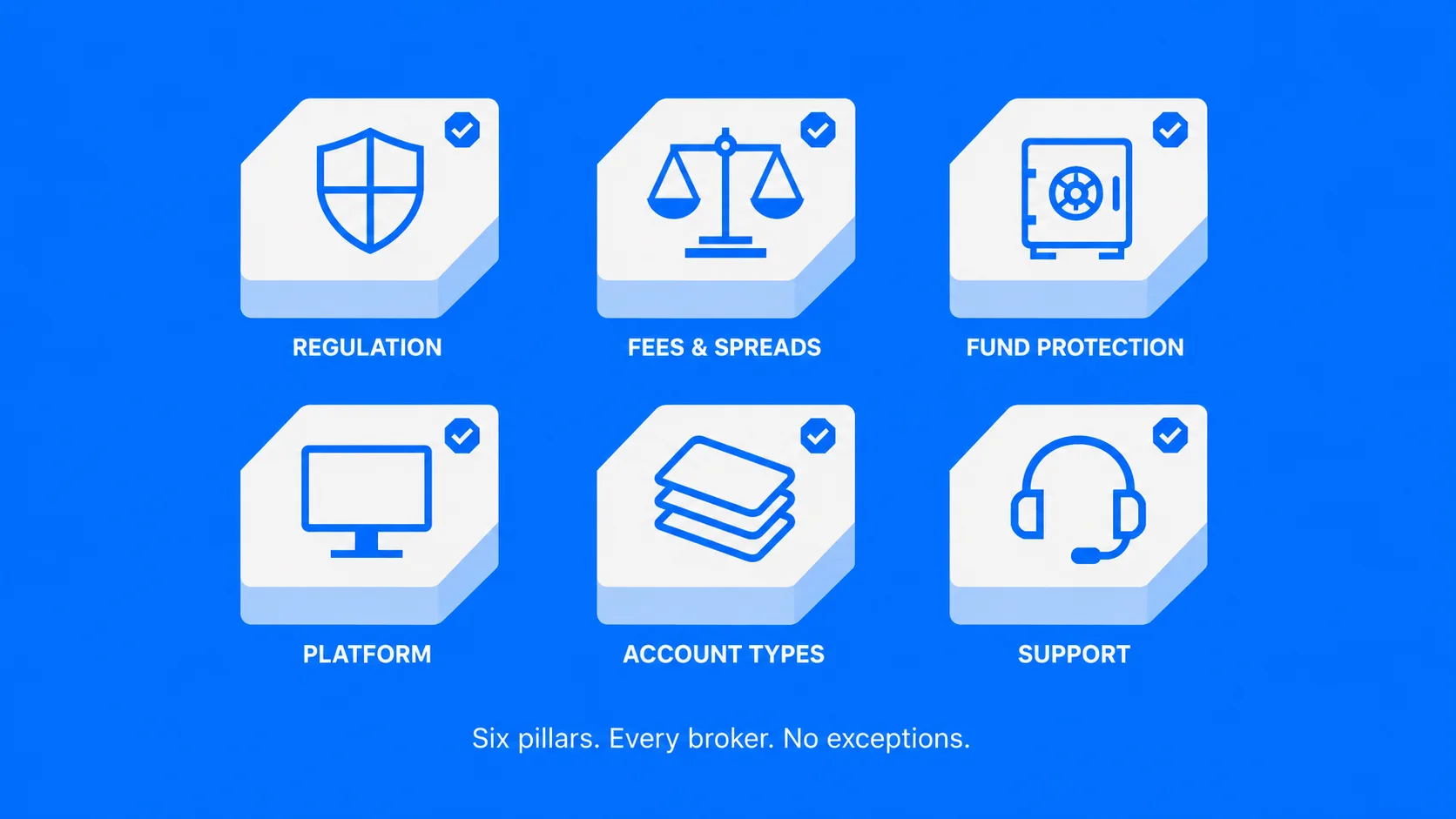
Broker Checklist: What to Verify Before You Deposit
Use this checklist when evaluating any broker:
- Licensed and regulated by a recognised financial authority
- Licence number independently verified on the official regulator’s website
- Confirmed which entity holds your funds and executes your trades
- Full fee structure (spreads, commissions, swaps, withdrawal fees) clearly disclosed
- Offers access to the specific asset classes you intend to trade
- Supports MT4, MT5, or a platform you are confident using
- Client funds held in segregated bank accounts
- Negative balance protection confirmed
- Multiple account types available, including a free demo account
- Responsive customer support with a documented escalation process
- Transparent, timely withdrawal process with no hidden charges
What is the most important thing to check when choosing a broker?
Regulation, and specifically which regulated entity serves your country and what that licence permits. Always verify the licence number directly on the regulator’s official website, not just on the broker’s own page.
What is the difference between a spread and a commission?
A spread is the built-in difference between the buy and sell price of an instrument, the broker’s implicit cost per trade. A commission is an additional, explicit flat charge per trade or per lot. Some brokers use one model, some use both. ECN accounts typically offer tight spreads combined with a per-lot commission.
Should I use MT4 or MT5?
MT4 is better suited for traders who rely on Expert Advisors, custom indicators, and a large existing ecosystem of tools. MT5 is the stronger choice if you need access to more asset classes or want advanced order types and backtesting. Both are available through UEXO.
What is a demo account, and do I need one?
A demo account lets you trade with virtual funds under real market conditions. It is strongly recommended for new traders, and equally useful for experienced traders testing a new strategy before going live. Most reputable brokers offer a demo at no cost.
How do I verify a broker’s regulatory status?
Locate the broker’s regulatory authority and licence number on their website, then visit that regulator’s official website and search for the broker directly. Regional registers include the UAE SCA, DFSA, ADGM FSRA, Saudi CMA, Egypt FRA, QFCRA, and the Central Bank of Bahrain. International registers include the FCA, ASIC, FSCA, and FSC Mauritius.
Can I trade forex, indices, and commodities all with one broker?
Yes. Multi-asset brokers like UEXO provide access to multiple asset classes from a single account, removing the need to split capital across separate brokers for different markets.
What does negative balance protection mean?
It means your account balance cannot go below zero regardless of how a trade moves against you. Your maximum loss is limited to the funds you have deposited, and you will never owe the broker money beyond your account balance.
Is a broker regulated in one country safe for traders in other countries?
It depends on the broker’s licensing structure. Some brokers hold licences in multiple jurisdictions to serve clients across different regions. Always check which regulated entity is serving your country of residence and whether that entity holds an appropriate licence for your jurisdiction.
Apply these criteria before you open any trading account. Start with UEXO: open a free demo or live account and evaluate the platform, execution, and support for yourself.